Can You Drive on Flat Tyre? What to Do Next
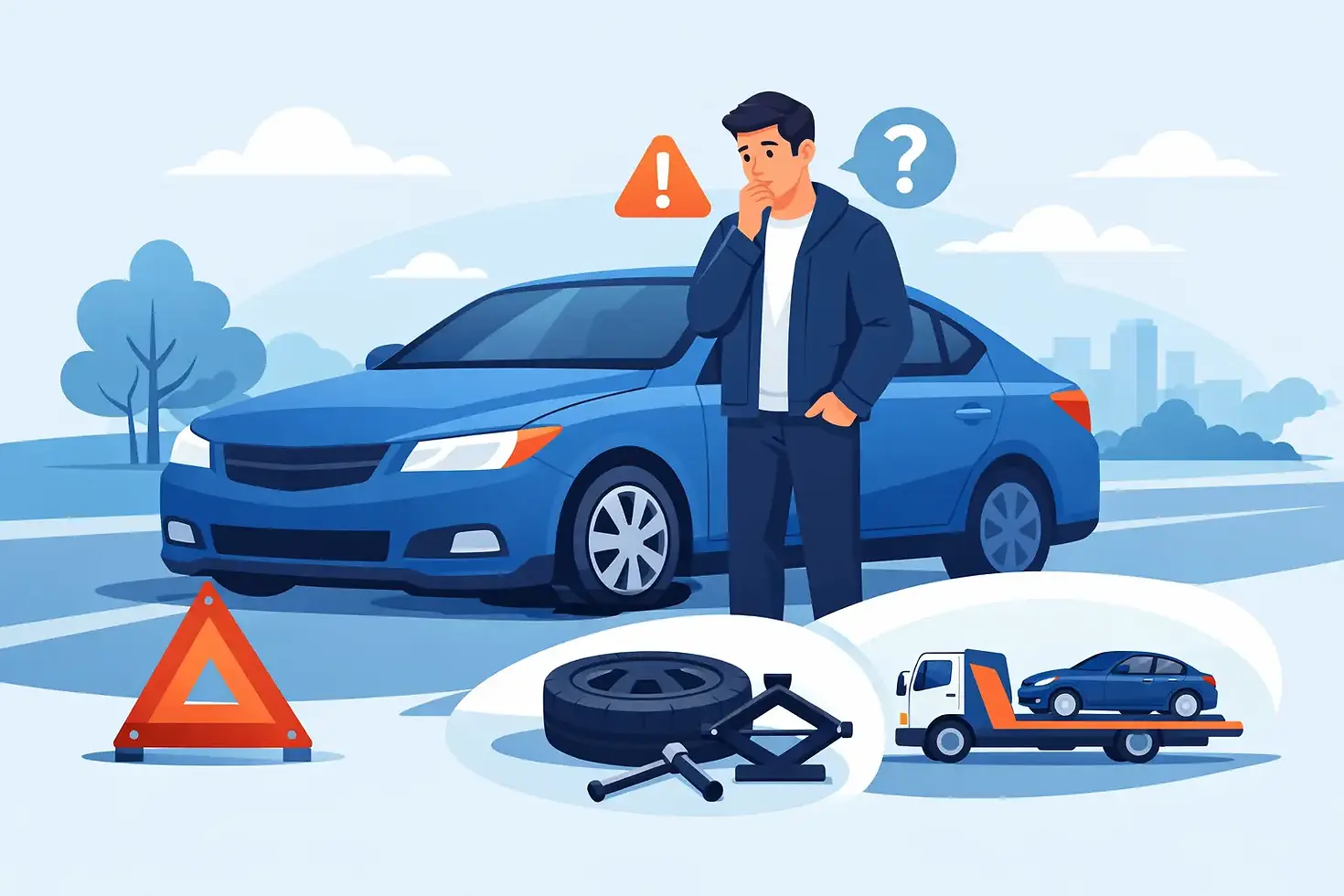
A tire loses pressure quickly, the steering feels heavy, and the car starts pulling toward one side. In that moment, the question is simple: can you drive on flat tyre? For almost every standard tire, the answer is no. Continuing to drive can destroy the tire, damage the wheel, affect braking and handling, and turn a straightforward roadside tire replacement into a more costly repair.
The safest choice is to slow down, pull over in a safe location, and arrange professional assistance. A flat tire is inconvenient, especially when you are heading to work, managing deliveries, or carrying passengers, but protecting the vehicle and everyone in it comes first.
Can You Drive on a Flat Tire at All?
A completely flat standard tire should not be driven on. Its internal structure is designed to support the vehicle only when it contains the correct air pressure. Once the pressure is gone, the sidewalls flex excessively and can become trapped between the wheel and the road surface.
Even a short distance can cause irreversible internal damage. The rubber may look acceptable from the outside after air is added, but the cords inside the tire can be weakened or broken. That is why a tire that has been driven while flat often needs replacement rather than a puncture repair.
There is one limited exception: if you are stopped in an immediately dangerous position, such as in an active traffic lane, moving very slowly only far enough to reach a safer nearby area may be the least risky option. Use hazard lights, avoid sharp steering inputs, and stop as soon as you are out of immediate danger. This is not a way to continue your journey or reach a repair shop several miles away.
Why Driving on a Flat Causes So Much Damage
The tire is not simply a layer of rubber around the wheel. It contains steel belts, fabric plies, bead wires, and reinforced sidewalls engineered to carry load, manage heat, and maintain a stable contact patch with the road.
When a tire is flat, that structure collapses under the weight of the vehicle. Heat builds rapidly as the sidewall folds and rubs against itself. The tire can separate internally, shred, or come off the wheel. At speed, the loss of control can be severe, particularly on a front tire where steering response is affected.
The wheel is also exposed. A tire normally cushions the wheel from potholes, curbs, and uneven road surfaces. Without that cushion, the wheel can bend, crack, or become badly scratched. A damaged wheel may no longer seal correctly with a replacement tire, creating repeat pressure-loss problems.
For vans and commercial vehicles, the consequences can be greater. Higher vehicle loads place more stress on an underinflated or flat tire. A damaged tire can lead to delayed deliveries, lost work time, and a vehicle that is unsafe to return to service until it has been properly inspected.
Flat Tire, Low Tire, or Slow Leak: Know the Difference
Not every pressure warning means the tire is fully flat. A low tire may still look round but have insufficient pressure for safe driving. A slow leak can develop over hours or days due to a nail, valve issue, wheel corrosion, or a damaged bead seal.
If the tire is visibly squashed at the bottom, the sidewall is bulging, you hear flapping, or the vehicle pulls strongly, treat it as a flat and stop. Do not rely on appearance alone, though. Modern low-profile tires can lose a substantial amount of air before they visibly collapse, while still being unsafe to drive on.
If your tire-pressure monitoring system warning appears but the vehicle feels normal, stop at the next safe opportunity and check all four tires. Use a reliable pressure gauge if available and compare the reading with the pressure shown on the vehicle placard, usually located inside the driver-side door frame. Do not use the maximum pressure printed on the tire sidewall as your target setting.
What to Do When You Get a Flat Tire
First, reduce speed gradually. Avoid sudden braking or aggressive turns, which can make the vehicle unstable. Turn on your hazard lights and look for a firm, level location away from moving traffic.
Once stopped, put the vehicle in park, apply the parking brake, and keep passengers in a safe position away from traffic. On a busy roadway, it is often safer for occupants to move behind a barrier if one is available and it is safe to do so. Do not stand beside the vehicle near passing traffic.
Check whether you have a usable spare tire, the correct tools, and a safe place to work. Many newer vehicles have no spare at all, only a tire inflator kit or sealant. A sealant kit may provide a temporary solution for a small tread puncture, but it will not repair a sidewall cut, a damaged wheel, or a tire that has been driven flat. It can also complicate a later repair.
If you are unsure of the cause, lack a spare, have a damaged wheel, or are on a dangerous roadside, professional mobile assistance is the sensible choice. A trained technician can inspect the tire, assess whether repair is possible, fit a replacement when needed, and confirm correct pressure and wheel balance before the vehicle returns to the road.
Can You Drive on Run-Flat Tires?
Run-flat tires are designed to support the vehicle temporarily after a loss of pressure, but they are not permission to ignore a puncture. Their reinforced sidewalls allow limited travel at a restricted speed, commonly up to 50 miles at 50 mph, although the precise limit depends on the tire and vehicle manufacturer.
Check your owner’s manual and tire markings before relying on those figures. Load, road temperature, existing tire damage, and how long the tire was driven without pressure all matter. Some run-flat tires cannot be repaired after being driven flat, while others may be repairable only if strict manufacturer conditions are met.
A run-flat tire should still be inspected as soon as possible. Do not use its limited mobility to continue normal travel, make a long delivery run, or delay service until it becomes convenient.
When a Flat Tire Can Be Repaired
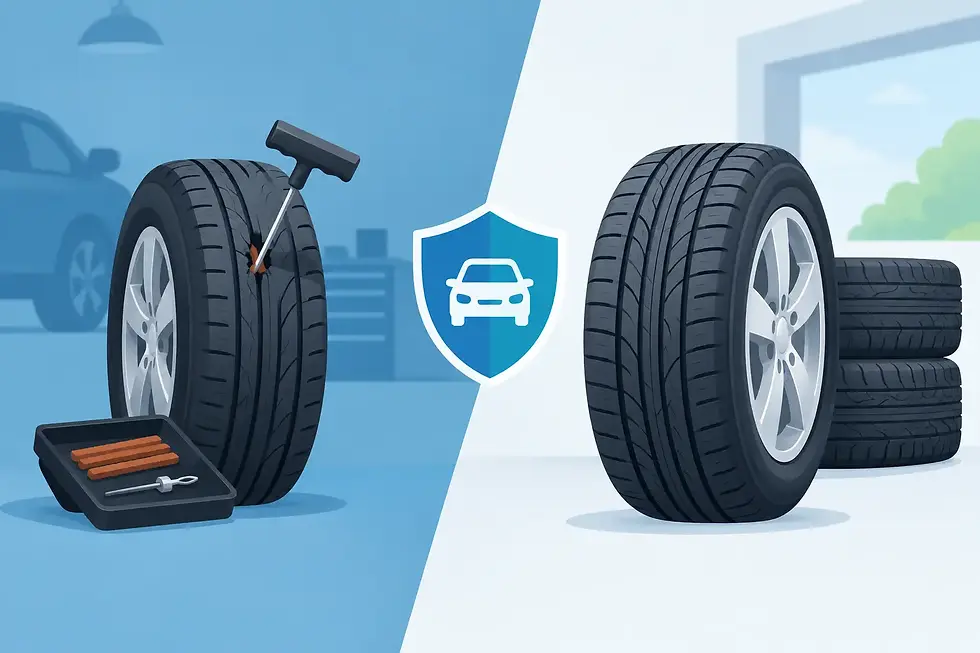
A professional repair may be possible when the puncture is small, located in the central tread area, and the tire has not been driven while significantly underinflated. The tire must also have enough remaining tread depth and no structural, sidewall, bead, or belt damage.
Punctures in the shoulder or sidewall usually require tire replacement. These areas flex heavily during driving and cannot be reliably restored with a plug or patch. A quick external plug may reduce air loss temporarily, but it is not a substitute for a proper internal inspection and approved repair.
The technician should remove the tire from the wheel to inspect the inside for scuffing, heat damage, or broken material. This diagnostic step matters because internal damage is not always visible from the outside.
Prevent the Next Roadside Tire Emergency
Pressure checks take only a few minutes and can prevent many flats. Check tires at least monthly, before long trips, and whenever the pressure warning light appears. Check them when cold for the most accurate reading.
Also inspect the tread for embedded objects, cuts, uneven wear, and cracking. Repeated pressure loss in one tire should never be dismissed as normal. It may point to a puncture, a leaking valve, wheel damage, or a bead-sealing issue that needs diagnosis.
For business vehicles, scheduled inspections are particularly valuable. Catching a slow leak before a driver reaches a job site can prevent downtime, missed appointments, and unnecessary tire damage.
A flat tire does not have to derail the day. Stop early, avoid driving on it, and get the wheel and tire assessed with the precision the vehicle needs. MobileTyreXpert provides roadside and on-location tire support to help drivers get moving again safely, with the right repair or replacement rather than a risky temporary guess.


Comments