
Commercial Fleet Tyres That Keep Vans Moving
A delivery van sitting still with a flat tire can disrupt far more than one route. It can delay customer appointments, leave tools stranded, force drivers into overtime, and put pressure on the rest of the schedule. Commercial fleet tyres are therefore an operating decision, not just a maintenance purchase. The right specification, regular checks, and fast support when damage occurs keep vehicles safe and earning.
For fleets running around Bournemouth and the South Coast, the challenge is often time. Vans cover mixed routes, carry changing loads, stop and start frequently, and cannot always be taken out of service for a garage visit. A disciplined tire plan helps prevent avoidable downtime while ensuring that urgent failures are handled properly when they do happen.
Why commercial fleet tyres deserve closer attention
A tire is the only part of a loaded van that meets the road. Its condition affects braking distance, wet-weather grip, steering response, ride quality, fuel use, and the likelihood of a roadside failure. When tread is low, pressure is incorrect, or a tire is damaged, the risk rises quickly under commercial loads.
Fleet costs are also rarely limited to the replacement tire. A failure can mean a missed delivery window, recovery costs, driver downtime, lost work, and damage to customer confidence. Replacing a tire early may feel inconvenient, but running it until it fails is often the more expensive choice.
The correct tire depends on the vehicle, axle load, daily mileage, route type, and operating conditions. A lightly loaded local service van has different needs from a long-distance courier vehicle or a trades van carrying heavy equipment every day. Choosing on price alone can lead to faster wear, poor handling, and more frequent replacements.
Selecting commercial fleet tyres for the job
Start with the manufacturer-approved size, load rating, and speed rating for each vehicle. These are not optional details. The load index confirms how much weight each tire can safely carry, while the speed rating reflects the tire's intended operating capability. Fitting an unsuitable specification can compromise safety, insurance requirements, and vehicle performance.
Load is particularly important for commercial vans. A vehicle may feel fine on an empty run, then become unstable or overwork its tires once materials, parcels, passengers, or equipment are onboard. Reinforced commercial tires are commonly required because their construction is designed to manage heavier and more regular loads. Check the actual working weight, including racking, tools, stock, and any tow load where applicable.
Tread pattern should match the route. Highway-focused tires can suit vehicles covering longer distances on maintained roads, often supporting predictable handling and fuel efficiency. Vans that work on wet urban roads, building sites, or uneven access routes may benefit from a pattern with stronger water evacuation and greater resistance to cuts. There is always a trade-off: a tougher tire may not deliver the same refinement or fuel economy as one optimized for motorway mileage.
All-season tires can be a sensible option for many South Coast fleets because they provide practical year-round performance without seasonal tire changes. However, they are not automatically the best choice for every operation. High-mileage vehicles with consistent routes may achieve better results from a tire chosen specifically for their workload and conditions.
Match tires across each axle
For predictable braking and handling, fit matching tire types, sizes, and tread patterns across the same axle whenever possible. Mixing tires can alter grip characteristics, especially in heavy rain or during emergency braking. If one tire must be replaced because of sudden damage, assess the condition of its axle partner rather than treating the replacement in isolation.
Commercial vehicles should also use the correct valve, wheel balance, and torque procedure at installation. A quality tire fitted without proper balancing or final checks can still cause vibration, uneven wear, and avoidable driver complaints.
The inspection routine that prevents downtime
A quick walk-around before a shift is one of the most cost-effective fleet controls available. Drivers do not need to be tire technicians, but they should know what requires attention and how to report it promptly.
Look for these warning signs before the vehicle leaves:
Low pressure, a visibly soft tire, or a tire that has dropped pressure repeatedly
Cuts, cracks, bulges, exposed cords, or objects embedded in the tread
Uneven wear on the inner edge, outer shoulder, or center of the tread
Tread approaching the legal limit or reduced wet-weather performance
Vibration through the steering wheel, pulling under braking, or a change in handling
Pressure deserves particular attention. Underinflation causes excess heat buildup, weakens handling, and accelerates shoulder wear. It can also increase fuel consumption. Overinflation can reduce the contact patch and contribute to harsh ride quality and center tread wear. Check pressures when tires are cold and use the vehicle manufacturer's recommended settings for the load being carried.
A recurring pressure loss should never be dismissed as normal. It may be caused by a nail, valve issue, wheel corrosion, or a damaged rim. Finding the source early can make the difference between a safe repair and a full replacement.
Watch for alignment and suspension clues
Tires often reveal mechanical problems before a driver notices them elsewhere. Feathering, one-sided wear, or rapid shoulder wear can point to alignment issues, worn suspension parts, or repeated kerb strikes. Replacing the worn tire without correcting the cause simply starts the same expense cycle again.
If a van pulls to one side, the steering wheel is off-center, or drivers report vibration after pothole impact, arrange an inspection. Precision balancing and alignment checks protect the new tire investment and make the vehicle more comfortable to operate on long shifts.
Repair or replacement: make the safe call
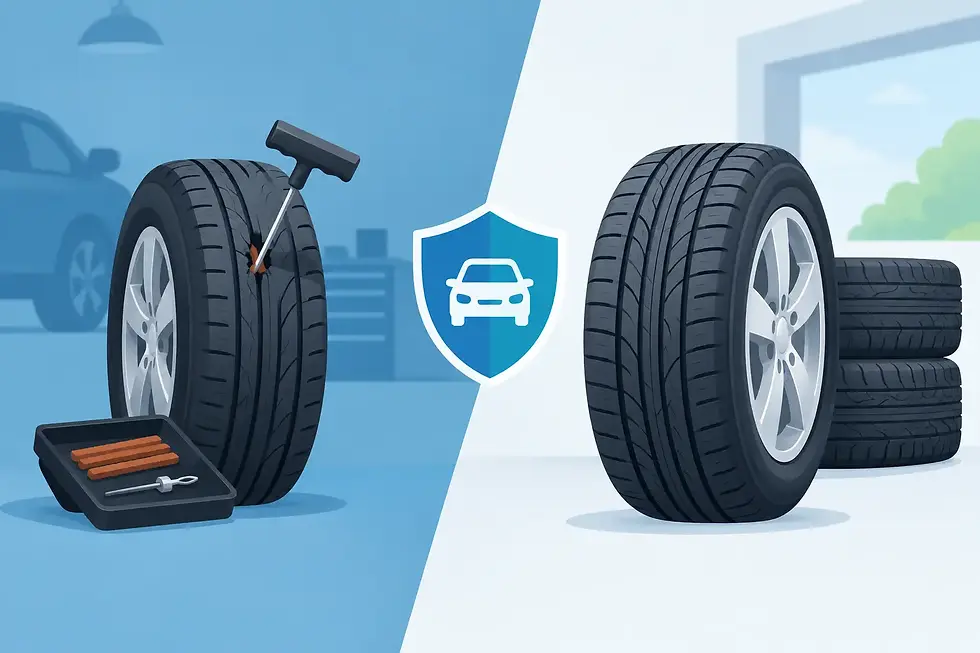
Not every puncture requires a new tire, but not every puncture can be repaired safely. A professional inspection should determine whether the damage is within the repairable tread area, whether the tire has been driven while flat, and whether the internal structure remains sound.
Damage to the sidewall, a large puncture, exposed cords, severe cracking, or a tire driven at low pressure for any distance usually requires replacement. Sidewalls flex constantly and cannot be safely treated like a straightforward tread puncture. Continuing to use a compromised tire risks a sudden failure, particularly when the van is loaded or traveling at speed.
Fleet managers should also avoid relying on temporary sealant as a long-term solution. It may help in a limited emergency, but it does not replace a thorough inspection, correct repair, or proper balancing. A vehicle that returns to service with an unresolved issue may fail at the worst possible time.
Build a response plan before the roadside call
Even well-managed commercial fleet tires can suffer damage from screws, potholes, curb impacts, and road debris. The difference is how quickly and correctly the business responds. Keep a record of every vehicle's tire size, load rating, wheel type, usual operating location, and driver contact details. That information speeds up assistance when a vehicle is stopped on a live job.
Drivers should know to park safely, avoid driving on a flat tire, switch on hazard lights, and report the location and damage clearly. They should not attempt a roadside repair in an unsafe place or continue driving simply to finish the route. A few extra miles on a deflated tire can destroy a casing that may otherwise have been repairable.
MobileTyreXpert provides mobile repair, replacement, balancing, and emergency tire support at the vehicle location, helping fleet operators reduce the disruption of sending a van to a tire shop. For an urgent callout, accurate vehicle details and a clear location allow the technician to arrive prepared with the right equipment and tire options.
Treat tire records as operating data
Record fitting dates, tread depth, pressure issues, punctures, alignment work, and replacement reasons for every fleet vehicle. Over time, the pattern becomes useful. You may find that one route produces more punctures, a particular vehicle is wearing front tires unusually fast, or a certain tire model is delivering better mileage under your real working conditions.
This information supports smarter purchasing and maintenance scheduling. It also helps you identify whether a driver training issue, loading practice, or mechanical fault is driving costs. The goal is not to stretch tires beyond their safe life. It is to get consistent, safe service from every tire while planning replacements before they interrupt a working day.
A van's tires should not become the reason a customer is left waiting. Check them before the shift, act on early wear, and arrange qualified mobile support quickly when road damage puts a vehicle out of action.


Comments