
Mobile Tyre Fitting Bournemouth for Fast Help
A flat tyre on the A338, a screw in the tread outside your Bournemouth office, or a van stopped before its first delivery can disrupt far more than one journey. Mobile tyre fitting Bournemouth drivers and businesses can depend on brings the equipment, replacement tyres, and technical expertise directly to the vehicle, so you do not have to risk driving on a damaged tyre or lose hours at a garage.
For urgent problems, the priority is simple: make the vehicle safe, identify the fault correctly, and get you moving with the right repair or replacement. For planned work, mobile fitting gives you the same practical advantage at home or work, without rearranging your day around a tyre appointment.
When You Need Mobile Tyre Fitting in Bournemouth
Not every low tyre needs an emergency replacement, but every sudden loss of pressure deserves attention. Continuing to drive on an underinflated or flat tyre can destroy the sidewall, damage the wheel, affect handling, and turn a repairable puncture into a full replacement. If the vehicle feels unstable, pulls to one side, or the tyre pressure warning light appears, stop in a safe location as soon as conditions allow.
A mobile technician can assess punctures, cuts, impact damage, valve faults, worn tread, and pressure loss at your location. That matters because the visible issue is not always the real issue. A nail may be repairable if it is in the central tread area and the tyre has not been driven flat. Damage to the shoulder or sidewall, however, normally requires replacement because the structure of the tyre has been compromised.
Emergency fitting is particularly useful when a spare is missing, unsuitable, or already in use. Many newer vehicles do not carry a conventional spare wheel. Others have a temporary space-saver that is not intended for normal speed or distance. A correctly specified replacement fitted where you are is often the safer, more efficient answer.
Mobile Tyre Fitting Bournemouth Drivers Can Plan Around
Mobile service is not only for roadside failures. If your tyres are approaching the legal tread limit, showing age-related cracking, vibrating at speed, or wearing unevenly, booking fitting at your driveway or workplace can prevent a more urgent problem later.
The right tyre is not simply the cheapest one that matches the wheel size. Load rating, speed rating, vehicle use, driving conditions, and manufacturer requirements all matter. A family SUV, a performance vehicle, and a working van may share similar wheel diameters while needing very different tyre specifications. Using an unsuitable load or speed rating can affect safety, insurance compliance, and how the vehicle performs under braking or cornering.
An experienced technician will confirm the tyre size and specification before installation. They should also inspect the wheel, valve, existing wear pattern, and the remaining tyres. If one tyre has worn prematurely, the cause may be incorrect pressure, alignment issues, suspension wear, or repeated heavy loads. Replacing the tyre without recognizing the cause may only delay the next problem.
Repair or Replacement: The Decision Depends on the Damage
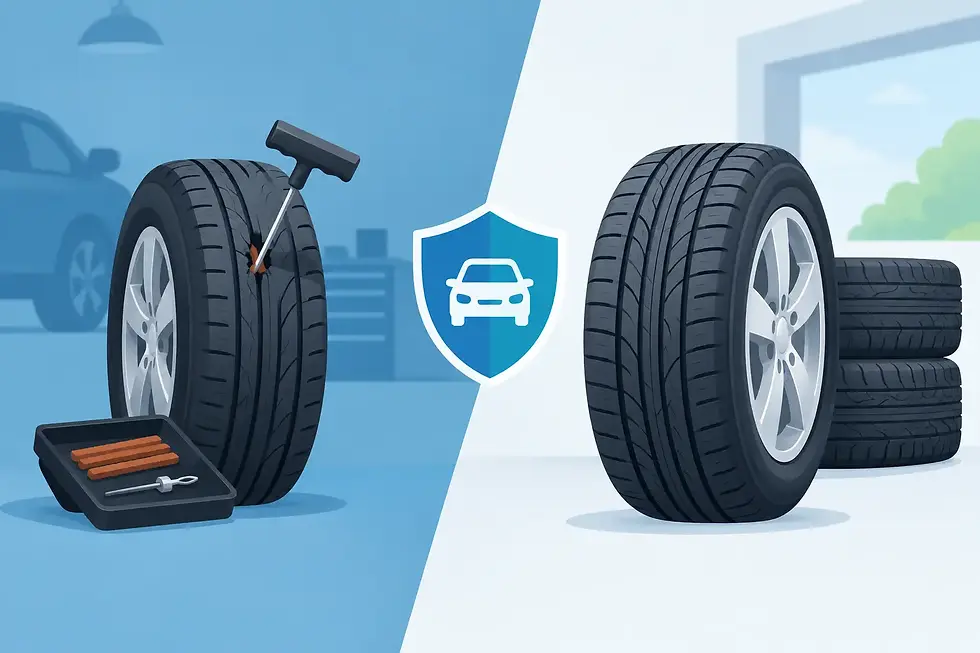
A puncture repair can be a sensible and cost-effective option when the damage is in the repairable tread zone, the hole is within an acceptable size, and the tyre’s internal structure has not been harmed. A proper repair requires a thorough inspection, not a quick external plug pushed into the hole.
Replacement is the correct route for sidewall damage, severe tread damage, exposed cords, bulges, or tyres driven while flat. It is also necessary when tread depth is too low or the tyre has deteriorated through age. A reliable mobile service will explain the finding clearly and recommend only the work that is needed.
There can be a trade-off when replacing a single tyre. On some vehicles, particularly those with all-wheel drive or significant differences in tread depth across an axle, matching tyre type and remaining tread can be important. Your technician can advise whether one replacement is appropriate or whether pairing tyres on the same axle is the safer choice.
What Happens During an On-Site Fitting
Good mobile tyre work is a controlled technical process, not just a wheel change. After confirming the vehicle and tyre specification, the technician secures the vehicle, removes the wheel safely, and examines the old tyre and rim. The replacement tyre is fitted using suitable equipment to avoid damage to the bead or wheel finish.
The wheel is then balanced to reduce vibration through the steering wheel, floor, or seat at road speed. Correct balancing improves driving comfort and helps avoid uneven wear. The tyre is inflated to the appropriate pressure, and the wheel is refitted using the correct tightening procedure. Final checks should include a visual inspection for leaks and confirmation that the vehicle is ready to return to the road.
For performance-focused drivers, this precision is especially valuable. Small fitting or balancing errors can be noticeable at motorway speeds and can undermine the handling you expect from the vehicle. For commercial operators, the same care helps protect tyres from avoidable wear and keeps vehicles available for work.
Why Fast Response Matters for Vans and Fleets
A disabled van is not just a vehicle issue. It can mean missed customer appointments, delayed deliveries, idle staff, and an interrupted day for everyone depending on that route. Mobile tyre support reduces the gap between a tyre failure and a vehicle returning to service.
Fleet operators benefit from a clear process: report the vehicle location, registration, tyre size if known, and the nature of the issue. If the vehicle is carrying a load or is parked in a restricted area, say so at the time of booking. Those details help the technician arrive with the right equipment and assess any site-safety considerations before work begins.
MobileTyreXpert operates with a one-hour emergency response commitment, bringing fully equipped technicians to urgent tyre problems across the service area. Actual arrival can depend on traffic, weather, vehicle location, and safe access, but early, accurate information gives the response team the best chance of getting to you quickly.
Stay Safe While You Wait for Assistance
If a tyre fails while driving, avoid hard braking or sudden steering inputs. Ease off the accelerator, hold the wheel firmly, and move to a safe place when you can. On a busy road, your safety comes before inspecting the tyre.
Once stopped, switch on hazard lights and keep passengers away from traffic where possible. Do not stand beside the vehicle on the traffic side, and do not attempt a repair if the location is unsafe. If you are on a motorway or an exposed high-speed route, follow appropriate road-safety guidance and wait in a protected location.
At home or work, the risk is lower, but the same principle applies: do not drive a visibly flat tyre to a garage in the hope it will hold. Call for professional assessment instead. Saving a short journey is not worth risking wheel damage, a failed tyre carcass, or a loss of control.
Book the Right Service, Not Just the Fastest One
When requesting mobile tyre assistance, provide the location, vehicle make and model, registration, and whether the tyre is flat, punctured, damaged, or simply due for replacement. A photo of the tyre damage can help where it is safe to take one. If you know the tyre size, share it, but do not worry if you do not. The information is printed on the sidewall and can be confirmed during inspection.
Ask whether a repair may be possible, what tyre options are available, and whether balancing is included with replacement. Clear answers before work starts help you make a confident decision, whether you need a practical budget tyre, a premium equivalent, or a specification matched to commercial use.
A tyre problem rarely arrives at a convenient time. The right response is calm, prompt, and precise: stop safely, get an expert diagnosis, and arrange fitting where the vehicle is. That approach protects your schedule, your wheels, and the people relying on you to get moving again.


Comments