
Tyre Fitting at Workplace Keeps Teams Moving
A flat tire in an employee parking lot can turn a normal workday into a missed appointment, a delayed delivery, or a van sitting idle with a full schedule ahead. Tyre fitting at workplace gives drivers and businesses a practical alternative: qualified help comes to the vehicle, so the vehicle does not have to be taken out of service just to reach a garage.
For a tradesperson, delivery driver, sales representative, or fleet manager, that difference is significant. Rather than arranging recovery, finding a ride, and losing hours of productive time, a mobile technician can inspect the problem, advise on the safest repair or replacement, and complete the work where the vehicle is parked.
When workplace tire fitting makes sense
Workplace fitting is useful for more than an obvious puncture. It can be the right option when a tire has lost pressure slowly during the day, when a sidewall has been damaged by a curb, or when the tread is too worn to safely continue a journey. It also works well for scheduled replacements, particularly when several company vehicles are based at one site.
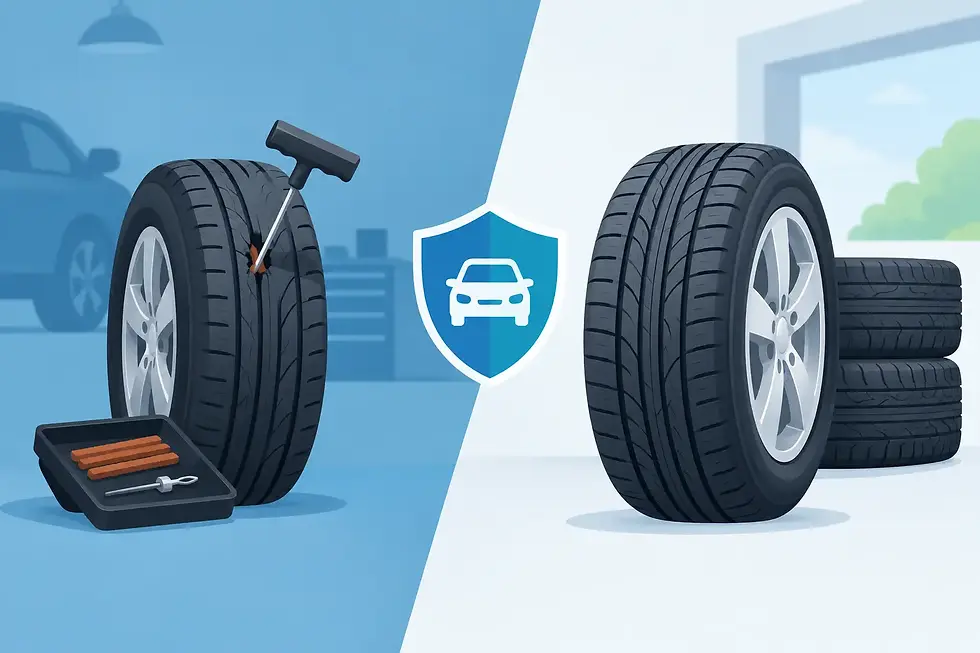
The best choice depends on the vehicle, the damage, and the location. A simple, repairable tread puncture may be resolved quickly if the tire has not been driven flat. A split sidewall, exposed cords, severe shoulder damage, or a tire run at very low pressure normally calls for replacement. A capable technician should explain that distinction clearly rather than fitting a repair that compromises safety.
For businesses, the strongest case is often operational. If a vehicle is needed for customer calls, tools, stock, or deliveries, every unnecessary trip to a tire shop adds downtime. On-site service keeps the driver near their work, protects the day’s schedule, and gives fleet managers a clearer view of when the vehicle will be ready again.
What happens during tyre fitting at workplace
A professional mobile appointment starts with the right details. The technician needs the vehicle location, tire size, wheel type, the nature of the fault, and whether the vehicle is blocking an entrance, loading area, or safe parking space. This allows the service vehicle to arrive prepared with suitable equipment and, where arranged, the correct replacement tire.
Once on site, the work should begin with an inspection. The technician checks the affected tire, valve, wheel rim, and visible tread condition. They also look for the reason the tire failed. Removing a nail without checking for internal damage, for example, is not a proper diagnosis. The tire must be assessed from the inside before a repair can be approved.
If replacement is required, the wheel is removed using appropriate equipment and the new tire is fitted to the manufacturer’s recommended specification. The assembly is then inflated, seated correctly, and balanced. Correct wheel balancing matters. An imbalance can cause steering vibration, uneven tread wear, and avoidable strain on suspension components, especially on vehicles that spend long hours on the road.
The final checks are just as important as the fitting itself. Wheel fasteners must be tightened to the correct torque, tire pressures should be checked across the vehicle where appropriate, and the driver should be told what was fitted and why. For vehicles with a tire-pressure monitoring system, the technician should also confirm whether a reset or relearn procedure is needed.
Safety comes before convenience
Mobile tire service is convenient, but it should never be rushed at the expense of safe working conditions. A vehicle parked on level ground in a designated parking area is generally straightforward. A vehicle stopped in an active loading bay, on a narrow access road, or close to moving site traffic may require additional precautions or repositioning.
Drivers can help by parking in the safest available area, switching on hazard lights if necessary, and letting reception, security, or a site manager know that a mobile technician is expected. Keeping the wheel-lock key, if the vehicle uses one, accessible will also prevent delays.
There are situations where fitting cannot safely be completed on site. Heavy vehicle traffic, unstable ground, inadequate clearance, or a vehicle positioned in a dangerous roadside location can change the plan. An experienced technician will be direct about this. The goal is to restore mobility quickly, but never by creating a new risk for the driver, staff, or technician.
A better option for fleets and busy teams
For a business running vans or cars, tire problems rarely arrive at a convenient time. A single flat can leave a route uncovered, force a job to be reassigned, or leave expensive equipment stranded in a vehicle. Mobile workplace fitting reduces that disruption by bringing technical support to the fleet rather than sending the fleet away for support.
It can also make planned tire management easier. Instead of taking vehicles off the road one at a time, a manager can arrange appointments around shift changes, quieter periods, or when vehicles are already parked. This is particularly useful for trades businesses, care providers, local delivery operations, and sales teams that rely on their vehicles throughout the day.
The savings are not only about the price of the tire. Consider driver time, missed jobs, fuel used traveling to a garage, and the cost of a vehicle sitting unavailable. The lowest initial quote is not always the lowest operational cost. A tire fitted correctly at the workplace can return a vehicle to service with far less disruption.
Choosing the right tire and service level
Not every replacement tire is the same, and the right recommendation should reflect how the vehicle is used. A van that carries tools or stock may need a commercial-rated tire with the correct load index. A high-mileage company car may prioritize wet-weather grip, durability, and fuel efficiency. A performance vehicle may need a tire specification that preserves handling and braking characteristics.
The correct size, load rating, and speed rating are non-negotiable. Fitting a cheaper alternative that does not meet the vehicle’s requirements can affect safety, insurance compliance, and vehicle performance. Where there is a choice between premium, mid-range, and budget options, the technician should explain the practical trade-offs in expected wear, grip, ride quality, and cost.
For vehicles with all-wheel drive, there may be further considerations. Significant differences in tread depth or tire circumference across the axle can affect drivetrain systems. In some cases, replacing a pair or matching an existing tire closely is the more sensible recommendation. This is where technical advice is worth more than a quick, one-size-fits-all sale.
How to prepare before booking
When calling for workplace tire help, have the vehicle registration, location, and a brief description of the issue ready. If you can see the tire size on the sidewall, provide it, but do not worry if you cannot. A photo of the damaged tire and the vehicle’s parking position can help confirm what equipment and access will be required.
Be clear about timing. If the vehicle must leave for a delivery route in two hours, say so. If it is safely parked and can wait until later in the day, a scheduled appointment may be the most efficient option. Emergency response is valuable when a vehicle is stranded or work cannot continue, while planned fitting suits routine replacement and fleet maintenance.
MobileTyreXpert provides emergency and scheduled mobile tire support for drivers and commercial operators, with technicians equipped to inspect, repair, replace, balance, and return vehicles to the road with care.
A tire issue at work does not have to take over the whole day. Park safely, share accurate details, and choose a service that treats diagnosis, fitting, and final safety checks with the same urgency as getting the vehicle moving again.


Comments