
Can Mobile Technicians Repair Tyres Safely?
A flat tyre outside your home, at a job site, or on the roadside does not automatically mean a costly replacement or a long wait at a garage. Can mobile technicians repair tyres safely? In many cases, yes. A properly equipped technician can inspect the damage, confirm whether the tyre meets repair standards, and complete an approved repair at your location. The key is that the decision must follow a full diagnosis, not a quick visual guess.
For drivers and fleet operators, mobile tyre repair can protect both safety and schedules. But not every puncture is repairable, and a responsible technician will tell you when replacement is the safer option.
When Can Mobile Technicians Repair Tyres?
A mobile technician can normally repair a tyre when the puncture is in the central tread area, the damage is small, and the tyre has not been driven while flat. This is the section of the tyre designed to make contact with the road under normal use, and it is usually the only area where a permanent repair may be possible.
The technician will first locate the source of pressure loss. A nail or screw can be obvious, but slow leaks are not always visible. The valve, wheel rim, bead seal, and previous repair area may all need to be checked. Professional diagnosis matters because fitting a repair without finding the real cause can leave you with another flat tyre shortly afterward.
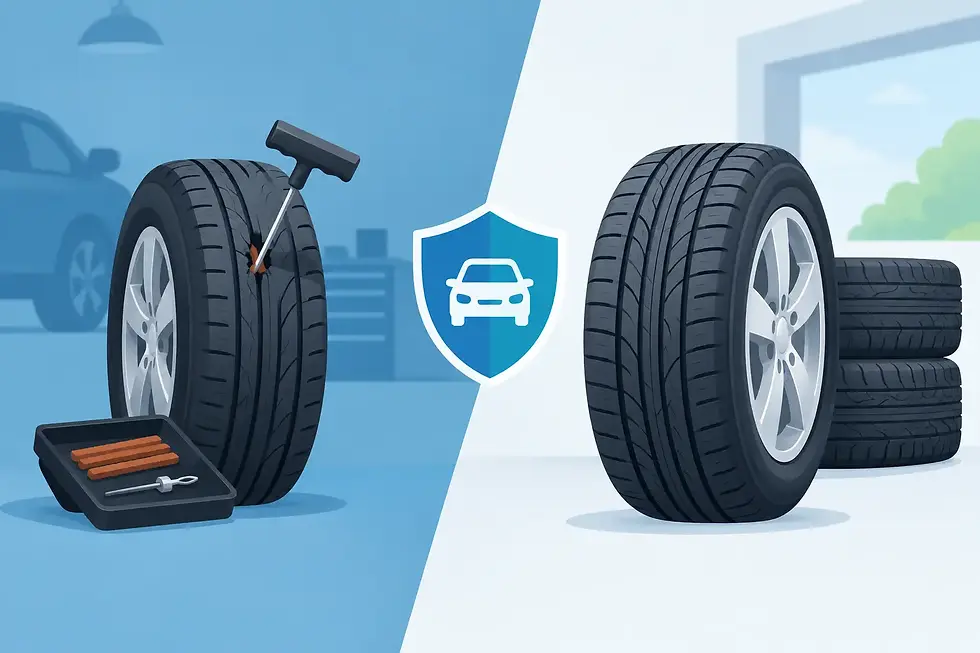
If the tyre is suitable, the repair should be completed using an approved method from inside the tyre. That means the wheel is removed, the inside is inspected, the puncture channel is prepared, and a combined repair patch and plug is fitted. The tyre is then reseated, inflated to the correct pressure, checked for leaks, and balanced where required.
A Roadside Repair Is Not a Shortcut
Mobile service is about bringing workshop-level equipment and process to your vehicle. It should not mean accepting lower standards because you are parked at home, on a roadside, or outside a workplace.
A qualified mobile technician arrives with the tools to lift the vehicle safely, remove and refit the wheel, inspect the casing, inflate accurately, and test the finished work. For many vehicles, balancing is also part of doing the job properly. An imbalance can cause steering vibration, uneven tyre wear, and a less stable driving feel at speed.
At MobileTyreXpert, the goal is to restore safe, dependable mobility without making you lose hours traveling to a garage. That requires technical precision, not just speed.
Damage That Usually Requires Replacement
There are clear situations where a repair should be refused. This can feel frustrating when you need to get moving, but replacement is the correct call when the tyre's structure may be compromised.
Sidewall and shoulder punctures are generally not repairable. These areas flex heavily as the vehicle moves, so even a small injury can weaken the tyre in a way that a patch cannot reliably correct. Cuts, tears, bulges, exposed cords, or impact damage from a pothole or curb also require close scrutiny and will often mean fitting a new tyre.
Driving on an underinflated or flat tyre is another major concern. The inside of the casing can be damaged by friction and heat, even if the outside looks acceptable. A technician needs to inspect the interior for rubber dust, creasing, discoloration, or damaged cords before recommending a repair.
Run-flat tyres add another consideration. Some may be repairable under the manufacturer’s conditions, but only after a careful internal inspection. Others should be replaced once driven without pressure. The vehicle model, tyre specification, distance traveled, and visible evidence of damage all affect the decision.
What a Proper Mobile Tyre Inspection Includes
A trustworthy answer starts with more than looking at the puncture. The technician should assess tyre pressure, tread depth, the puncture position and size, and the overall condition of the casing. They should also inspect the wheel rim and valve, since corrosion, a cracked rim, or a leaking valve can imitate a puncture.
The inside inspection is especially important. Removing the tyre from the wheel makes it possible to identify damage that cannot be seen externally. This is why an exterior-only plug, pushed into a hole without removing the tyre, is not the same as a full permanent repair.
For a commercial van or fleet vehicle, the inspection should also consider load demands. A tyre that may seem usable on a lightly driven passenger vehicle could be unsuitable for a van carrying tools, stock, or deliveries. Keeping a vehicle on the road matters, but keeping it safe under working load matters more.
Repair Versus Replacement: The Practical Trade-Off
Repair is usually the more cost-effective route when the tyre is structurally sound. It also avoids replacing a tyre with plenty of usable tread remaining. For a straightforward tread puncture, it can be the fastest way to return to your day.
Replacement is necessary when the repair cannot be guaranteed. It may also be the better choice if the tyre is already close to its legal wear limit, has uneven wear from alignment issues, or has suffered repeated damage. Fitting a new tyre to an axle can require consideration of the matching tyre on the opposite side, particularly on performance vehicles and all-wheel-drive models.
An experienced technician should explain the options clearly: what has been found, why a repair is or is not appropriate, and what replacement specification suits your vehicle. Clear advice is particularly valuable when you are stranded and under pressure to make a quick decision.
What Mobile Technicians Can Do at Your Location
A fully equipped mobile tyre service can handle much more than a basic puncture. Depending on the vehicle, tyre availability, and the condition found during inspection, the technician can repair a qualifying puncture, fit a replacement tyre, replace a damaged valve, address a bead leak, and balance the wheel after installation.
That is useful when a flat happens on your driveway before work, in a business parking lot, or while a van is needed for a scheduled job. Instead of arranging recovery or driving cautiously on a temporary spare, you can have the vehicle assessed where it is.
Emergency response is particularly valuable when time is tight. In Bournemouth and surrounding South Coast areas, mobile support can reduce the disruption of a roadside failure, especially for drivers who cannot safely continue or commercial operators facing lost working hours.
How to Protect the Tyre Before Help Arrives
If you notice a puncture, avoid driving on the tyre unless it is necessary to move away from immediate danger. Even a short distance on a deflated tyre can turn a repairable puncture into a replacement job by damaging the internal structure.
Do not remove a nail or screw from the tread. It may be slowing the air loss, and removing it can make the tyre go flat quickly. Park on firm, level ground if possible, switch on hazard lights when appropriate, and keep passengers in a safe place away from traffic.
If your vehicle has a tyre pressure monitoring warning, treat it as an early signal rather than waiting for the tyre to look visibly flat. Checking pressure promptly can save the tyre and prevent damage to the wheel.
Choosing a Mobile Tyre Service You Can Trust
The right provider will prioritize inspection and safety over promising that every tyre can be repaired. Ask whether the technician will remove the tyre for an internal check, whether they can provide replacement options if repair is refused, and whether balancing is available after fitting.
You should also expect clear pricing before work begins, an accurate arrival update, and advice that reflects your vehicle’s use. A family car, a high-performance vehicle, and a loaded work van do not always need the same solution.
A puncture does not have to take over your day. Keep the vehicle stationary if it is safe to do so, get a professional diagnosis, and let the condition of the tyre determine the next step. The fastest solution is only worthwhile when it is the safe one.


Comments