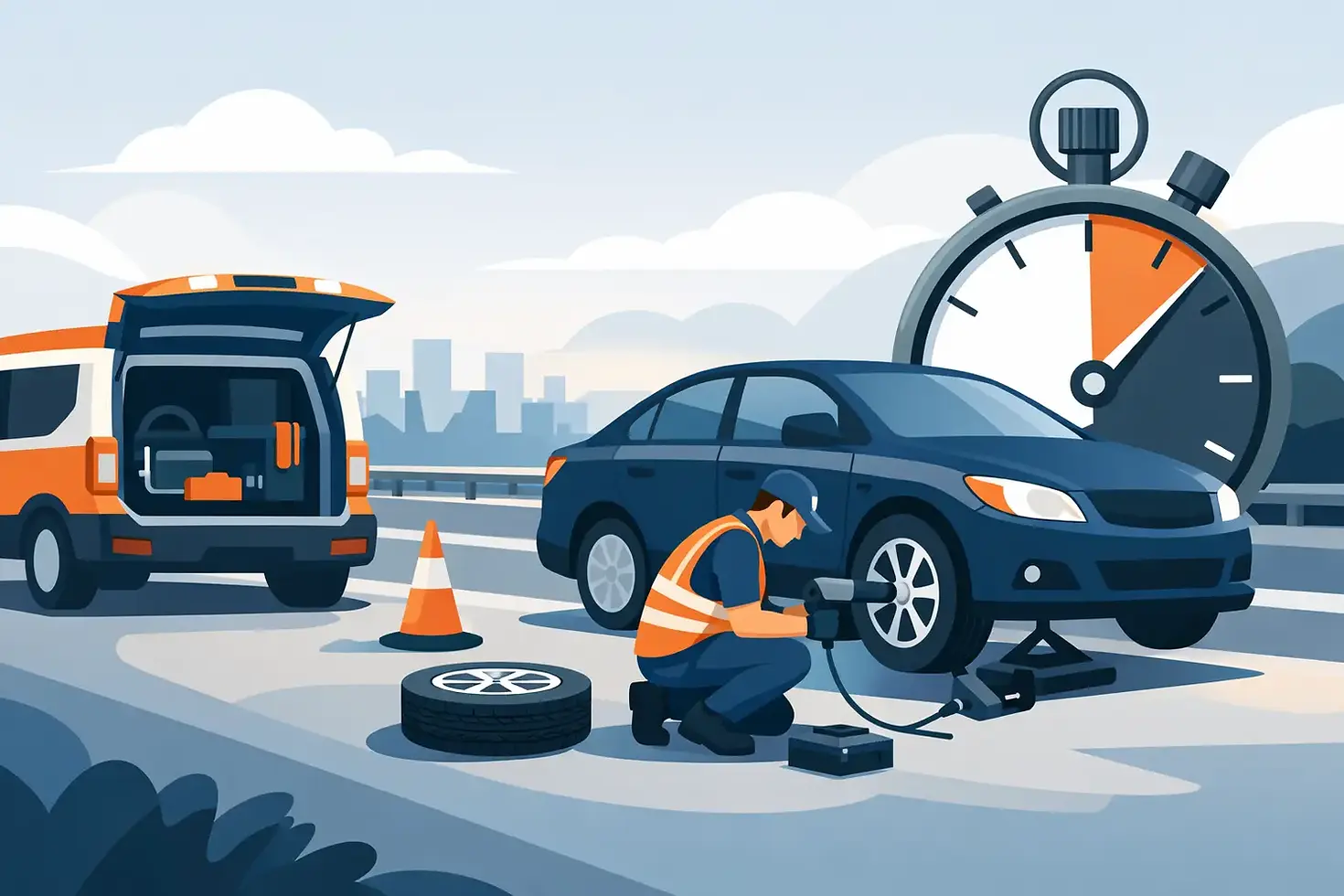
How Roadside Tyre Repairs Work When Time Matters
A tire warning light, a sudden pull through the steering wheel, or the sound of air escaping can turn a normal journey into an urgent problem. Understanding how roadside tyre repairs work helps you make the right call: protect the vehicle, avoid further damage, and get back on the road without taking chances on a temporary fix.
A professional mobile tire technician brings the inspection tools, repair materials, replacement tires, and balancing equipment to your location. That can mean the roadside, your driveway, a worksite, or a fleet depot. The goal is not simply to put air back in the tire. It is to determine why it lost pressure, whether the tire is structurally safe, and what repair or replacement will deliver reliable performance.
First, make the vehicle safe
If you notice a flat tire while driving, reduce speed gradually and avoid sharp steering inputs or hard braking. Pull into a safe, level location away from moving traffic if possible. Turn on your hazard lights, apply the parking brake, and keep passengers out of danger.
Do not continue driving on a flat or seriously underinflated tire just to reach a garage. Even a short distance can crush the sidewall between the wheel and road surface, damaging internal cords that cannot be repaired safely. A puncture that may have been a straightforward repair can quickly become a tire replacement.
Once the vehicle is secure, a mobile technician will confirm the tire size, vehicle location, and the nature of the issue before arriving. This allows the right equipment and, when necessary, a suitable replacement tire to be brought to the job.
How roadside tire repairs work, step by step
A proper roadside repair follows a disciplined inspection and repair process. Speed matters during a breakdown, but precision matters more. A tire that is repaired incorrectly can lose air again, handle unpredictably, or fail under load.
1. The technician identifies the cause of the pressure loss
The visible puncture is not always the whole story. A technician checks the tread, sidewalls, valve stem, wheel rim, and bead seal where the tire meets the wheel. A nail or screw in the tread is a common cause, but slow leaks can also come from corrosion around the rim, a damaged valve, an impact crack, or a previous poor-quality repair.
The tire is inflated to the correct working pressure where possible, then inspected using leak-detection methods. This confirms the exact source of the air loss instead of relying on assumptions.
2. The tire is assessed for repairability
Not every puncture can or should be repaired. In general, a repair may be possible when the damage is within the central tread area, the puncture is small, and the tire has not been driven flat.
Damage to the shoulder or sidewall usually requires replacement. These areas flex heavily while driving and contain structural components that a standard puncture repair cannot restore. Large holes, multiple close punctures, exposed cords, splits, bulges, or internal damage also rule out repair.
The technician will also check tread depth, tire age, and overall condition. Repairing a worn-out tire may not represent good value or safe motoring, even if the puncture itself is technically repairable. For commercial vans carrying loads, the inspection must account for the higher stresses placed on tires during daily work.
3. The wheel is removed and the tire is inspected internally
This is the point where professional repair differs from a quick roadside plug. A plug pushed into a hole from the outside may slow a leak, but it does not reveal whether the tire has suffered internal damage. It is best treated as a short-term emergency measure, not a complete repair.
For a reliable repair, the wheel is removed and the tire is demounted from the rim. The technician inspects the inside liner and sidewall for scuffing, heat damage, broken cords, or debris. If the inside of the tire is sound, the repair can proceed. If it is not, replacement is the safer answer.
4. The puncture is prepared and sealed from the inside
A professional puncture repair typically combines a plug that fills the injury channel with a patch that seals the inner liner. The puncture area is cleaned and prepared carefully so the repair material bonds correctly.
This process prevents air from escaping through the hole while also restoring an airtight seal inside the tire. Quality materials, correct preparation, and proper curing time are essential. A rushed repair may appear fine at first but fail later when heat, water, and road forces take their toll.
5. The tire is refitted, inflated, and checked
After the repair, the tire is remounted on the wheel, inflated to the manufacturer-recommended pressure, and tested again for leaks. The technician checks the valve and wheel bead as part of the final quality control.
If your vehicle uses a tire pressure monitoring system, the sensor condition may also be checked. Some vehicles need the system reset or recalibrated after tire work so the dashboard warning accurately reflects tire pressure.
6. The wheel is balanced and tightened correctly
When a tire has been removed from the wheel or a replacement tire is fitted, balancing may be required. Precision balancing helps prevent steering wheel vibration, uneven tread wear, and unnecessary strain on steering and suspension components.
The wheel is then installed using the correct tightening sequence and torque specification. This detail is easy to overlook, but it matters. Over-tightened wheel nuts can damage threads or distort components, while under-tightened nuts create an obvious safety risk.
When a roadside repair is not the right option
A trustworthy technician should be clear when replacement is necessary. The fastest answer is not always the safest answer, especially after driving on a flat tire or striking a pothole or curb.
Replacement is normally recommended when the sidewall is damaged, the tire has internal deterioration, the tread is too low, or the puncture is outside the repairable area. It may also be the best choice when the tire is old, has repeated repairs, or does not match the specification required for the vehicle.
For vehicles with all-wheel drive, tire matching deserves extra attention. Significant differences in tread depth or tire size across an axle can affect handling and place stress on drivetrain components. A knowledgeable technician can explain whether one tire is appropriate or whether a paired replacement is the better long-term decision.
Why mobile tire service saves more than a tow
A flat tire often creates a chain of disruption: a missed appointment, delayed delivery, lost work time, or a vehicle stranded where it cannot be safely left. Mobile service removes the extra step of arranging transport to a tire shop and waiting for an available bay.
For a driver, that means expert help at the location of the problem. For fleets, it means less vehicle downtime and a clearer path back to scheduled work. The technician can inspect, repair, replace, balance, and verify the tire on site, rather than leaving you with a temporary spare and another appointment to arrange.
MobileTyreXpert provides this kind of practical support with fully equipped technicians for urgent tire issues across Bournemouth and nearby South Coast areas. The exact solution depends on what the inspection finds, but the process should always be transparent: clear diagnosis, a safe recommendation, and work completed to an exacting standard.
What you can do while waiting for assistance
Avoid removing embedded objects such as nails or screws. They may be slowing the leak, and pulling them out can cause the tire to deflate rapidly. Do not use tire sealant unless it is specifically appropriate for your vehicle and you understand it may complicate a later repair or affect tire pressure sensors.
If you have access to a tire pressure gauge, note the reading, but do not repeatedly inflate a tire that loses pressure quickly. Keep the vehicle parked, take note of any impact or warning light that occurred before the flat, and tell the technician whether you drove any distance after pressure was lost. That information helps them assess hidden damage accurately.
A roadside tire repair should leave you confident, not merely moving again. When the diagnosis is careful and the workmanship is precise, a stressful interruption can stay exactly that: an interruption, not the start of a larger safety or vehicle-repair problem.


Comments