
Can a Punctured Tyre Be Repaired Safely?
A tire can look almost normal after picking up a nail or screw, yet the damage may be serious enough to make driving unsafe. The question, can a punctured tyre be repaired, has a practical answer: often yes, but only when the puncture location, size, tire condition, and internal damage all meet safe repair standards.
For drivers stopped at home, work, on a delivery route, or at the roadside, the priority is not simply getting air back into the tire. It is making sure the repair will hold at speed, under braking, and through daily driving. A quick plug may appear to solve the problem, but a proper diagnosis determines whether your tire can safely stay in service.
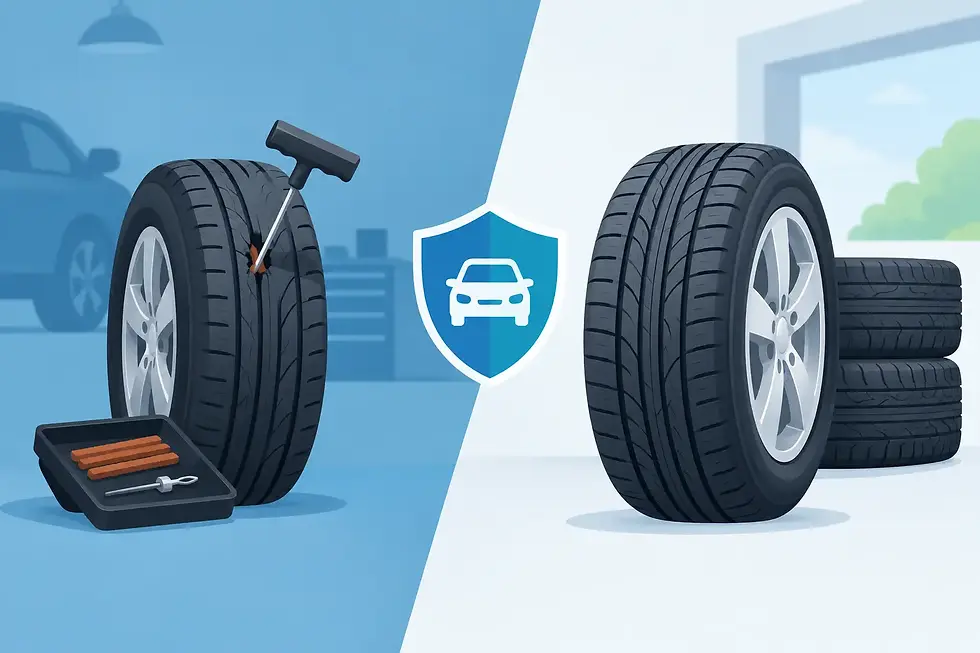
Can a punctured tyre be repaired? It depends on the damage
Most repairable punctures are small, clean holes in the central tread area. A nail, screw, or similar sharp object can often be repaired if it has entered straight through the tread and has not caused wider structural damage.
The repair becomes less likely when the hole is close to the shoulder or sidewall. These areas flex heavily while the vehicle is moving. Even a small puncture there can compromise the tire's structure, which is why replacement is usually the correct and safer option.
A professional inspection also looks beyond the visible object. The tire may have been driven while underinflated or completely flat, damaging the internal sidewall. That damage cannot always be seen from the outside, and it may rule out a repair even when the puncture itself seems minor.
The repairable area of a tire
As a general rule, punctures in the middle section of the tread have the best chance of being repaired. The outer tread, shoulder, and sidewall are different. They carry greater flex and stress, particularly during cornering and when the vehicle is loaded.
A technician will also consider the size of the puncture. Small holes are commonly repairable. Larger cuts, irregular tears, or damage caused by a broken object may not be. If there are multiple nearby punctures, repairing all of them could weaken the tire beyond an acceptable limit.
This is especially relevant for vans and commercial vehicles. Carrying tools, stock, passengers, or delivery loads puts extra stress on every tire. A borderline repair that may seem acceptable in a parking lot is not worth the risk of downtime or a roadside failure later in the day.
Why an external plug is not always enough
Many drivers carry a temporary tire plug kit. These can be useful in an emergency, but they do not replace a full professional repair. An external plug may slow or stop an air leak, but it cannot confirm whether the tire has internal damage or seal the inner liner correctly.
A proper repair requires the tire to be removed from the wheel for an internal inspection. The technician checks the casing, inner liner, bead area, and sidewalls for scuffing, creases, heat damage, and signs that the tire was run flat. If it passes inspection, the puncture is prepared and repaired using an approved combination patch and plug from inside the tire.
That approach seals the injury channel and the inside of the tire. It is a more reliable repair than pushing material into the hole from the outside, and it gives the technician a clear view of whether repair is appropriate in the first place.
When a punctured tire must be replaced
Replacement is the safe decision when the tire cannot reliably perform its job after repair. That includes punctures in the sidewall or shoulder, cuts or splits, exposed cords, significant tread separation, and damage from driving while flat.
A tire with low remaining tread may also be poor value to repair. If it is already close to its wear limit, replacement can be the sensible option rather than paying for a repair followed by a new tire shortly afterward. Uneven wear matters too. Feathering, cupping, or a worn inner edge can point to alignment or suspension issues that should be addressed alongside the tire problem.
Run-flat tires need particular care. They can sometimes be repaired, but only if the manufacturer permits it and the tire has not been driven beyond its specified flat-running distance or speed. The tire must be removed and inspected thoroughly. Never assume a run-flat is automatically repairable because it has held its shape.
What to do when you discover a puncture
If you find a screw or nail in the tread and the tire is still holding pressure, leave the object in place. Removing it can turn a slow leak into a rapid deflation. Check the tire pressure if you can, then arrange an inspection as soon as possible.
If the tire is visibly flat, avoid driving on it. Even a short distance can destroy a tire that might otherwise have been repairable. Pull over somewhere safe, switch on hazard lights, and keep clear of moving traffic. If you have a safe spare tire and know how to fit it correctly, it may get you mobile. Otherwise, roadside assistance is the better call.
Do not rely on tire sealant without considering the trade-off. Sealant may help in a limited emergency, but it can make a professional repair more difficult and may not work for larger holes or sidewall damage. It can also affect tire pressure monitoring sensors. Tell the technician if sealant has been used.
Mobile tire repair saves time without cutting corners
A puncture does not always happen near a tire shop or at a convenient time. Mobile service brings the inspection, repair equipment, and replacement options to your location, whether that is a driveway, workplace, depot, or safe roadside position.
For a repairable puncture, the process should still follow the same technical standards as a workshop repair: diagnosis, wheel removal, internal inspection, approved repair materials, inflation to the correct pressure, and final checks. If replacement is needed, the correct tire size, load rating, and speed rating must be confirmed before fitting.
MobileTyreXpert provides this type of practical support for drivers and fleet operators across the South Coast. The aim is straightforward: assess the damage accurately, carry out a safe repair where possible, or fit a suitable replacement without forcing you to lose hours traveling to a garage.
A repair is only safe if the tire is safe
The lowest-cost answer is not always the right one. A proper repair can be excellent value when the puncture is within the repairable tread area and the tire is otherwise sound. Replacement is the better decision when the tire's structure, wear level, or puncture location creates doubt.
After any puncture repair, check tire pressure regularly for the next few days and pay attention to warning lights, vibration, pulling, or a recurring pressure loss. These are not issues to ignore. Tires are the only contact between your vehicle and the road, so the standard for repair should always be confidence, not convenience.
If you are currently stopped with a flat or losing pressure, protect the tire by not driving on it. A prompt professional inspection may be the difference between a straightforward repair and an avoidable replacement.


Comments