
When Should Tyres Be Replaced? 7 Warning Signs
A tire can look acceptable while losing the grip, structure, or air retention needed to keep you safe. If you are asking when should tyres be replaced, do not wait for a complete flat or a failed inspection to find out. Tread condition, tire age, sidewall damage, pressure loss, and changes in handling all provide clear answers before a roadside problem interrupts your day.
For drivers, tradespeople, and fleet operators, replacing tires at the right time is not just a maintenance decision. It protects braking performance in wet conditions, keeps vehicles stable under load, and reduces the risk of an unexpected callout when time matters most.
When should tyres be replaced? Start with tread depth
Tread is designed to move water away from the contact patch where the tire meets the road. As it wears down, the tire has less capacity to clear water, which increases stopping distances and the risk of hydroplaning.
In the UK, the legal minimum tread depth for passenger-car tires is 1.6 mm across the central three-quarters of the tread, around the full circumference. Reaching that limit means the tire must be replaced. However, waiting until the absolute minimum is not the best safety decision, particularly through heavy rain, on motorways, or when carrying tools, passengers, or commercial loads.
A practical replacement point is often around 3 mm. At this level, wet-weather performance has already begun to decline compared with a newer tire. If the tread-wear bars are level with the surrounding tread, the tire is at or near its legal limit and should not remain in service.
Check more than one point across the tire. Wear concentrated on one shoulder, the center, or the inside edge can signal an alignment, inflation, or suspension issue. Fitting a replacement without correcting the cause can lead to the new tire wearing prematurely.
1. Replace tires with cracks, cuts, or sidewall damage
The sidewall is not like the tread. It has no thick, replaceable rubber layer and is constantly flexing while the vehicle is moving. A deep cut, split, bulge, or exposed cord in this area is a serious structural concern.
A sidewall bulge often appears after a hard pothole strike or curb impact. It can indicate that the internal cords have been damaged, even if the outside rubber has not split. The tire may still hold air, but its structure is compromised and it can fail without much warning. Replacement is the safe option.
Surface cracking can develop as tires age, especially when vehicles spend long periods parked outside or are used infrequently. Fine, shallow weather checking does not always require immediate replacement, but cracks that are widespread, deep, or visible around the sidewall and tread blocks need a professional inspection. Do not assume that adding air or applying tire dressing solves the issue.
2. Replace a tire after certain punctures
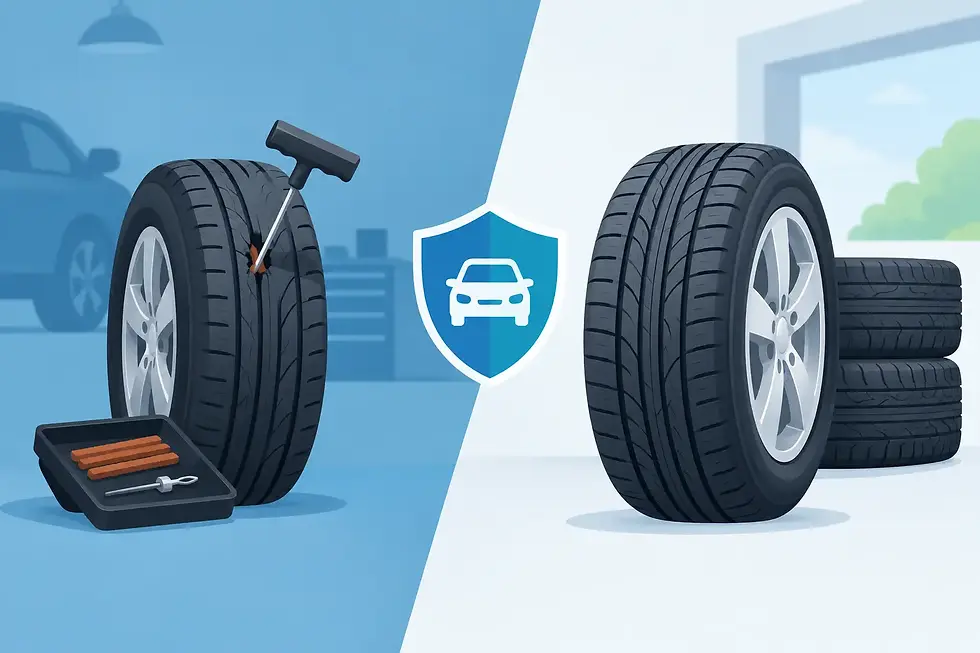
Not every puncture means a new tire. A small nail or screw hole in the central tread area may be repairable if the tire was not driven flat and the internal inspection confirms that its casing is sound.
The position and condition of the damage matter. Punctures in the sidewall, shoulder, or near the edge of the tread cannot normally be repaired safely. Nor should a tire be repaired if it has been driven with very low pressure for any distance. Running flat can crush and overheat the inner liner, damaging the structure in a way that is not visible from outside.
A proper repair is more than inserting a plug from the outside. The tire should be removed, inspected internally, and repaired using an approved method where suitable. If there is doubt about internal damage, replacement is the responsible choice. It is a smaller inconvenience than a tire failure at speed.
3. Do not ignore repeated pressure loss
A tire that needs topping up every few days or weeks is telling you something. The cause could be a slow puncture, a leaking valve, corrosion around the wheel bead, or damage to the wheel itself. Pressure loss also makes a tire run hotter, wear faster, and respond less predictably during braking and cornering.
Check pressures when tires are cold and use the vehicle manufacturer’s recommended settings, including any separate values for heavy loads. If one tire repeatedly reads lower than the rest, have it diagnosed rather than relying on regular air top-ups.
For commercial vans, this is especially relevant. A lightly loaded van and a fully equipped work vehicle can require different pressures. Underinflation on a loaded vehicle places extra stress on the tire carcass and can turn a manageable slow leak into a costly roadside failure.
4. Vibrations, pulling, and noise can point to tire damage
A vibration through the steering wheel, seat, or floor is not always a tire problem, but it deserves attention. It may be caused by wheel imbalance, uneven tread wear, a bent wheel, separated internal belts, or a suspension issue.
If vibration begins immediately after striking a pothole, curb, or road debris, arrange an inspection promptly. Continuing to drive can make damage worse and may affect handling. A tire with a belt separation can develop an uneven, raised section in the tread and should be replaced.
A vehicle that pulls to one side may need an alignment check, but tire condition can also contribute. Uneven wear on the inner or outer shoulder is often easier to spot when the wheels are turned fully. Catching it early can help you correct alignment before every tire is affected.
5. Age matters, even when tread looks good
Low-mileage tires are not automatically safe tires. Rubber changes over time due to heat cycles, sunlight, temperature swings, and exposure to the elements. A spare tire can also age without being used.
There is no single replacement date that applies to every tire because storage conditions, use, vehicle weight, and climate all make a difference. Still, tires that are around five years old should be inspected regularly by a qualified technician. By around ten years from the manufacturing date, replacement is generally recommended regardless of visible tread depth, unless the vehicle manufacturer states an earlier limit.
You can check the manufacturing date on the tire sidewall using the DOT code. The final four digits show the week and year of production. For example, 2423 means the tire was made in the 24th week of 2023.
6. Replace tires when wear is uneven or below safe performance
Uneven wear is not only a tire-life problem. It can change how the vehicle brakes and handles. Center tread wear usually points to overinflation, while wear on both outer shoulders can indicate underinflation. Wear on one edge is commonly associated with incorrect alignment or worn suspension components.
A technician should inspect the full tire and wheel assembly before recommending replacement. Depending on the cause, you may need alignment correction, balancing, valve service, or suspension repairs alongside new tires. This protects your investment and helps the vehicle track correctly afterward.
If only one tire needs replacement, the correct approach depends on the vehicle and the remaining tires. On many two-wheel-drive vehicles, matching tires should be fitted across the same axle. For all-wheel-drive systems, differences in rolling circumference can place strain on drivetrain components, so follow the vehicle manufacturer’s guidance. A professional can assess whether one replacement is suitable or whether a pair, or full set, is the safer choice.
7. Replace tires immediately after a major impact or visible cord exposure
Some conditions are non-negotiable. Stop driving and arrange assistance if you can see fabric, steel cords, or deep damage through the rubber. The same applies to a tire that has suddenly developed a bulge, has separated tread, or has gone completely flat after an impact.
If you are stopped in an unsafe location, prioritize your safety. Move away from traffic where possible, use hazard lights, and avoid attempting a roadside repair near fast-moving vehicles. A mobile technician can inspect the damage at your location, fit a suitable replacement where required, and balance the wheel correctly before you continue.
A quick tire check can prevent a disrupted day
Check tread, pressure, and sidewalls at least once a month and before long journeys. Add a closer inspection after hitting a pothole, scraping a curb, or noticing a change in steering or ride quality. These short checks are particularly valuable for vans and fleet vehicles, where a single tire failure can delay jobs, deliveries, and customers.
When the condition is unclear, do not guess. MobileTyreXpert can assess the tire at home, work, or roadside, explain whether repair is safe, and provide a correctly fitted replacement when it is not. Acting on the first warning sign is usually the fastest way to keep your schedule moving and your vehicle safe.


Comments