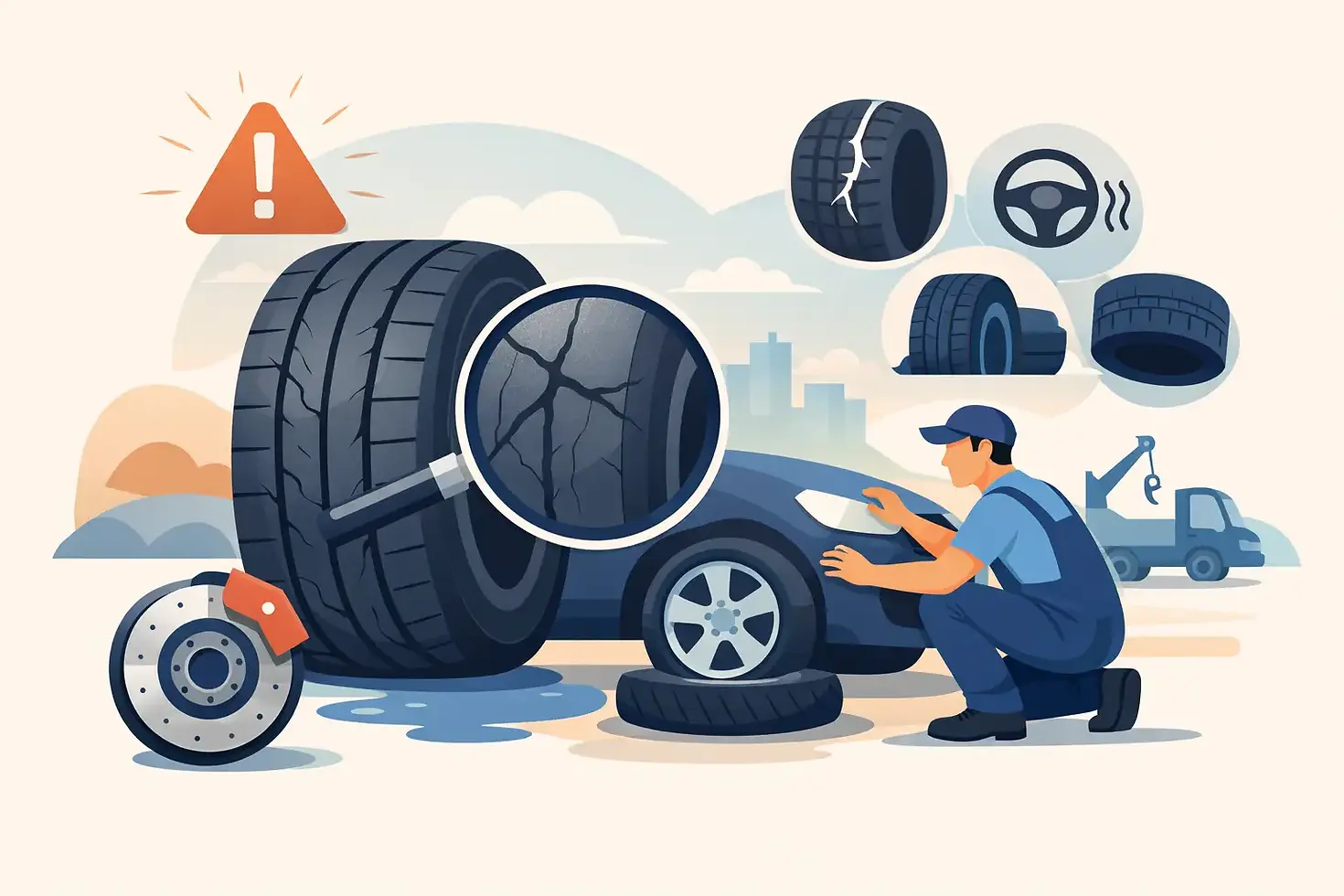
7 Clear Signs Tyre Replacement Is Urgent
A tire can lose its safety margin long before it goes completely flat. Knowing the signs tyre replacement is urgent can prevent a roadside breakdown, expensive wheel damage, or a loss of control when you need grip most. Some issues can wait for a scheduled fitting. Others mean the vehicle should be parked and assessed immediately.
For drivers and commercial operators, the decision is not only about getting more miles from a tire. It is about whether the tire can still carry the vehicle’s load, hold air correctly, and respond predictably under braking, cornering, and wet-road conditions.
1. You Can See Cords, Fabric, or Steel Belts
If threads, fabric, or steel wires are visible through the tread or sidewall, stop driving. The tire’s protective rubber has worn away or been damaged enough to expose its internal structure. At this point, the tire can no longer be relied on to contain pressure or support the vehicle safely.
This often happens after severe wear, a deep scrape against a curb, or driving while underinflated. It may appear as a small patch at first, but exposed cords are not a cosmetic defect and cannot be repaired. A replacement is urgent, even if the tire still appears to hold air.
2. The Sidewall Has a Bulge, Bubble, or Deep Cut
A bulge in the sidewall usually indicates broken internal cords. You may notice it after striking a pothole, curb, or road debris, especially on low-profile tires. The tire may look normal from a distance, but a raised bubble means its structure has been compromised.
Do not try to drive carefully and hope it lasts until the weekend. Sidewall damage can fail suddenly, particularly at higher speed or under load. A deep sidewall cut presents the same concern. Unlike a simple tread puncture, sidewalls flex constantly as the wheel turns, so repairs are not considered a safe long-term solution.
3. Tread Depth Is at or Near the Legal Limit
Tread channels move water away from the contact patch. As the grooves become shallow, wet-weather braking and steering performance drop sharply. A tire may feel acceptable on dry local roads, then lose traction unexpectedly in standing water or heavy rain.
In the United States, the legal minimum is commonly 2/32 inch of tread, although replacing tires before that point is the safer decision for regular wet-weather driving. Many tire professionals recommend planning replacement around 4/32 inch for wet grip, especially on the drive axle. For vans, delivery vehicles, and cars carrying passengers or equipment, waiting until the absolute minimum leaves little room for changing conditions.
Check the built-in treadwear bars across the main grooves. When the tread is level with these bars, replacement is due. Uneven wear can make one area reach that point much earlier than the rest of the tire.
4. The Tire Has a Puncture That Cannot Be Safely Repaired
Not every puncture requires a new tire. A small, clean hole in the central tread area can sometimes be professionally repaired after an internal inspection. But a puncture close to the shoulder, in the sidewall, or one that has caused the tire to be driven flat normally requires replacement.
The key issue is hidden damage. Driving even a short distance on a deflated tire can crush and overheat the sidewall from the inside. The tire may reinflate and look usable, but its internal reinforcement may already be weakened.
Temporary sealant, a plug, or repeated inflation may help move a vehicle out of immediate danger, but they are not a substitute for a proper diagnosis. If the tire loses pressure again, has multiple punctures, or has a cut rather than a round hole, treat it as an urgent tire issue.
5. You Feel New Vibration, Thumping, or Pulling
A vibration through the steering wheel, seat, or floor can come from wheel balance, alignment, suspension components, or tire damage. The difference matters, which is why the vehicle needs a proper inspection rather than guesswork.
A rhythmic thump may point to a separated belt, a flat spot, or an out-of-round tire. Pulling to one side can result from uneven tire wear, low pressure, or alignment problems. If either symptom begins suddenly after an impact, avoid high-speed driving until the wheels and tires have been checked.
Balancing can correct weight distribution on an otherwise healthy wheel and tire. It cannot fix broken belts, sidewall damage, or severely irregular wear. Continuing to drive on a damaged tire can also place extra stress on wheel bearings, suspension parts, and the remaining tires.
6. The Tread Is Wearing Unevenly or in Patches
Tires should wear gradually and relatively evenly across their tread. If one edge is bald while the other has usable depth, or if the tread feels scalloped when you run a hand across it, there is usually an underlying cause.
Common causes include incorrect alignment, worn suspension parts, poor balancing, and incorrect inflation pressure. Replacing the tire without correcting the cause can lead to the same problem on the new one. However, if the worn area has reached the wear bars or cords are close to showing, replacement should not wait for a future service appointment.
Look for these patterns:
Inner or outer edge wear, often linked to alignment angles or low inflation
Center wear, often linked to overinflation
Cupping or scalloping, which may indicate balance or suspension issues
Isolated bald patches, which can follow hard braking or a mechanical fault
A thorough inspection should assess the tire, wheel, alignment condition, and suspension components together. That is the practical way to protect the new tire investment and restore predictable handling.
7. The Tire Is Old, Cracked, or Losing Air Without Explanation
Rubber hardens with age, heat cycles, sunlight, and long periods of inactivity. Fine surface cracking around the sidewall or between tread blocks can be an early warning. Deep cracks, widespread cracking, or cracking combined with pressure loss mean the tire should be assessed promptly.
Age is not determined by tread depth alone. A vehicle that covers few miles may still have tires that are several years old and deteriorating. Check the date code on the sidewall and follow the vehicle manufacturer’s and tire maker’s guidance. If there is uncertainty, a technician can inspect for signs of dry rot, distortion, and loss of structural condition.
Slow pressure loss also deserves attention. It could be a nail, a leaking valve, corrosion around the wheel bead, or damage to the tire itself. Repeatedly topping up air without finding the source risks a flat at the least convenient moment.
When You Should Stop Driving Immediately
Park the vehicle and arrange urgent assistance if there is a sidewall bulge, exposed cords, a deep cut, a fully deflated tire, a tire that has been driven while flat, or severe vibration after an impact. Do not rely on the appearance of the tread alone. Damage inside a tire can be more serious than what is visible outside.
If the vehicle is in an unsafe location, move only as far as necessary to reach a safer spot, provided the wheel is not damaged and the tire is not completely flat. Avoid driving on the rim. It can turn a tire replacement into a more costly wheel repair and may leave the vehicle unsafe to move.
Get the Right Replacement, Not Just the Fastest One
An urgent replacement still needs to match the vehicle’s required tire size, load rating, speed rating, and intended use. This is especially relevant for vans, work vehicles, and performance-focused cars, where the wrong specification can affect handling, load capacity, and insurance or manufacturer requirements.
MobileTyreXpert can inspect the damaged tire at your home, workplace, roadside location, or fleet base, then fit and balance an appropriate replacement on site. For a business vehicle, fast diagnosis limits downtime. For an individual driver, it removes the risk of continuing a journey on a tire that may not safely finish it.
If something about your tire looks, feels, or sounds different, trust that warning. A prompt inspection is usually quicker, safer, and less disruptive than waiting for a failure to make the decision for you.


Comments