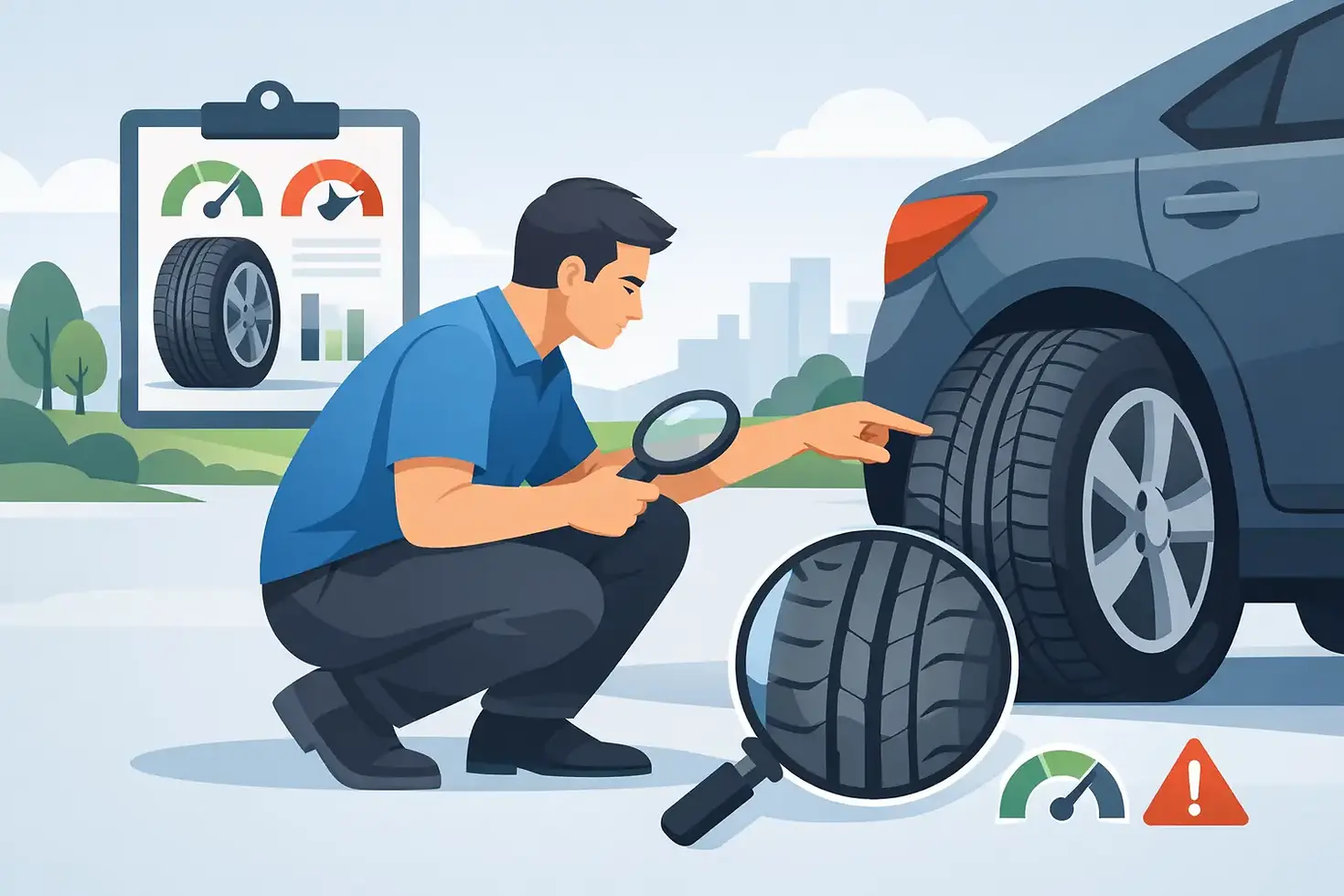
How to Check Tyre Tread Before It Becomes Urgent
A tire can look fine from the driver’s seat and still be close to losing the grip you need in rain, on a fast highway exit, or during an emergency stop. Knowing how to check tyre tread takes only a few minutes, but it can prevent a stressful roadside flat, poor handling, and an avoidable replacement at the worst possible time.
Tread is the patterned rubber that channels water away from the contact patch between your tire and the road. As that pattern wears down, wet-weather traction drops first. That is why a quick tread inspection should be part of your regular vehicle checks, especially before a long trip, heavy work week, or seasonal weather change.
How to Check Tyre Tread Accurately
Park on level ground, apply the parking brake, and turn the steering wheel so you can clearly see the front tire tread. Check all four tires, not just the one that looks most worn. Rear tires can wear differently, and damage on the inside edge may not be visible until you look closely.
The most reliable method is a tread-depth gauge. These inexpensive tools measure the remaining depth in 32nds of an inch and remove the guesswork. Place the gauge probe into a main groove, keep its base flat against the tread blocks, and record the reading. Take measurements at the inner, center, and outer sections of each tire.
For most passenger vehicles in the United States, 2/32 of an inch is the minimum legal tread depth. But waiting until that point is not a good maintenance strategy. Wet grip can become noticeably weaker before a tire reaches the legal limit. Consider planning replacement at around 4/32 of an inch for tires regularly used in heavy rain, and earlier if you rely on the vehicle for business, deliveries, or long-distance driving.
A tire may also have different legal requirements depending on the vehicle type and where it is operated. Commercial operators should follow the rules that apply to their vehicle class, axle position, and route, rather than relying on a general passenger-car standard.
Use the Built-In Wear Bars
Every modern tire has tread-wear indicator bars molded across the main grooves. These are narrow raised rubber bars running perpendicular to the tread pattern. When the surrounding tread wears down level with these bars, the tire has reached approximately 2/32 of an inch and needs replacement.
Wear bars are useful because you do not need a tool to find them. Look for small triangle, arrow, or "TWI" markings on the sidewall. These point toward the indicator bars in the tread grooves.
Check several locations around the tire. If one area is flush with the wear bars while another has deeper tread, the issue is not simply normal wear. Uneven tread often points to incorrect tire pressure, alignment problems, worn suspension components, or an overdue rotation.
Try the Penny Test When You Have No Gauge
A penny can provide a quick roadside estimate. Insert a Lincoln penny into a main tread groove with Lincoln’s head facing down. If the top of Lincoln’s head is fully visible, the tread is at or below 2/32 of an inch and the tire should be replaced immediately.
The penny test is practical when you are away from home or checking a vehicle before a trip, but it is not as precise as a tread gauge. It also does not tell you whether the tire is wearing evenly. Use it as an early warning, then arrange a proper inspection if the result is close or questionable.
Check More Than Tread Depth
Depth matters, but a safe tire inspection is never just one measurement. Run your eyes across the full tread surface and both visible sidewalls. You are looking for signs that the tire is no longer structurally sound or that the vehicle needs a mechanical adjustment.
Pay particular attention to these warning signs:
Cracks, cuts, bulges, or splits in the sidewall
Exposed cords, steel belts, or fabric beneath the rubber
Nails, screws, or other objects lodged in the tread
A tire that is visibly low on air or repeatedly losing pressure
Feathered edges, scalloped patches, or wear concentrated on one side
A bulge, exposed cords, or a deep sidewall cut calls for immediate action. Do not attempt to drive to a tire shop on a compromised tire if you can avoid it. These defects can lead to a sudden failure, particularly at highway speed or under a loaded van.
A nail in the tread is less straightforward. The tire may still hold pressure, but removing the object without assessing the puncture can turn a slow leak into a flat. A trained technician can determine whether the puncture is in a repairable area and whether the tire has been driven underinflated long enough to sustain internal damage.
What Uneven Tire Wear Is Telling You
The pattern of wear often reveals the cause. Wear down the center of the tread usually indicates overinflation. The tire is riding too heavily on its middle section, reducing its usable contact area.
Wear on both outer shoulders often suggests underinflation. Low pressure makes the tire flex excessively and puts more load on the edges. It can also create heat, worsen fuel economy, and increase the risk of tire damage.
If the inner or outer edge alone is wearing quickly, wheel alignment may be off. Hitting potholes, curbs, and road debris can alter alignment angles. For drivers covering busy urban routes, coastal roads, or frequent motorway miles, small alignment changes can shorten tire life faster than expected.
Feathering feels like sharp tread edges when you run your hand lightly across the tire in one direction. Cupping or scalloping creates uneven dips around the circumference. Both can indicate alignment, balancing, suspension, or shock absorber concerns. Replacing tires without correcting the underlying cause can mean the new set wears out early too.
When to Check Tire Tread
Check tire tread once a month and before any extended journey. It is also sensible to inspect after a hard pothole strike, curb impact, long period of parking, or a warning-light alert for tire pressure.
Fleet operators should build tread checks into weekly walk-around inspections. A van off the road for a preventable tire issue affects more than one appointment. It can delay deliveries, leave staff waiting, and disrupt the whole day’s schedule. Recording tread readings makes it easier to replace tires before they become an urgent operational problem.
Do not forget the spare tire. A spare with deep-looking tread may still be unusable if it is underinflated, cracked from age, or the wrong specification for the vehicle. Check its pressure and condition during the same inspection.
Do You Need a Repair or a Replacement?
Tread depth alone does not automatically decide the answer. A tire with plenty of tread may still need replacement after sidewall damage, a severe impact, or prolonged driving while flat. Conversely, a small puncture in the central tread area can sometimes be repaired safely if the tire has not been run underinflated and the internal casing is sound.
This is where a professional inspection saves time and uncertainty. A mobile technician can measure tread depth, inspect the puncture or wear pattern, check pressure, and assess whether balancing or alignment follow-up is needed. If replacement is the safer option, the correct tire can be fitted where the vehicle is parked, at home, at work, or at the roadside.
MobileTyreXpert provides this type of practical, on-site support for drivers and commercial vehicles that cannot afford unnecessary downtime. The goal is not simply to fit a tire quickly, but to identify the condition that caused the problem and help prevent the next interruption.
A tread check is a small job with a serious payoff. If your readings are close to the limit, wear is uneven, or the tire does not look right, act before the next rainstorm or work run makes the decision for you.


Comments