Best Tyres for Wet Roads That Handle Rain Well
A wet road can turn a familiar commute into a low-grip emergency in seconds. Standing water hides potholes, painted lines become slick, and worn tread can leave a vehicle skating across the surface rather than gripping it. The best tyres for wet roads are not simply the most expensive set available. They are tires with the right wet-braking performance, tread design, fitment, and condition for the vehicle you drive.
For drivers who rely on their car or van every day, wet-weather tire choice affects more than comfort. It affects stopping distance, steering control, fuel use, and whether a busy schedule is interrupted by a puncture or loss of traction.
What Makes the Best Tyres for Wet Roads?
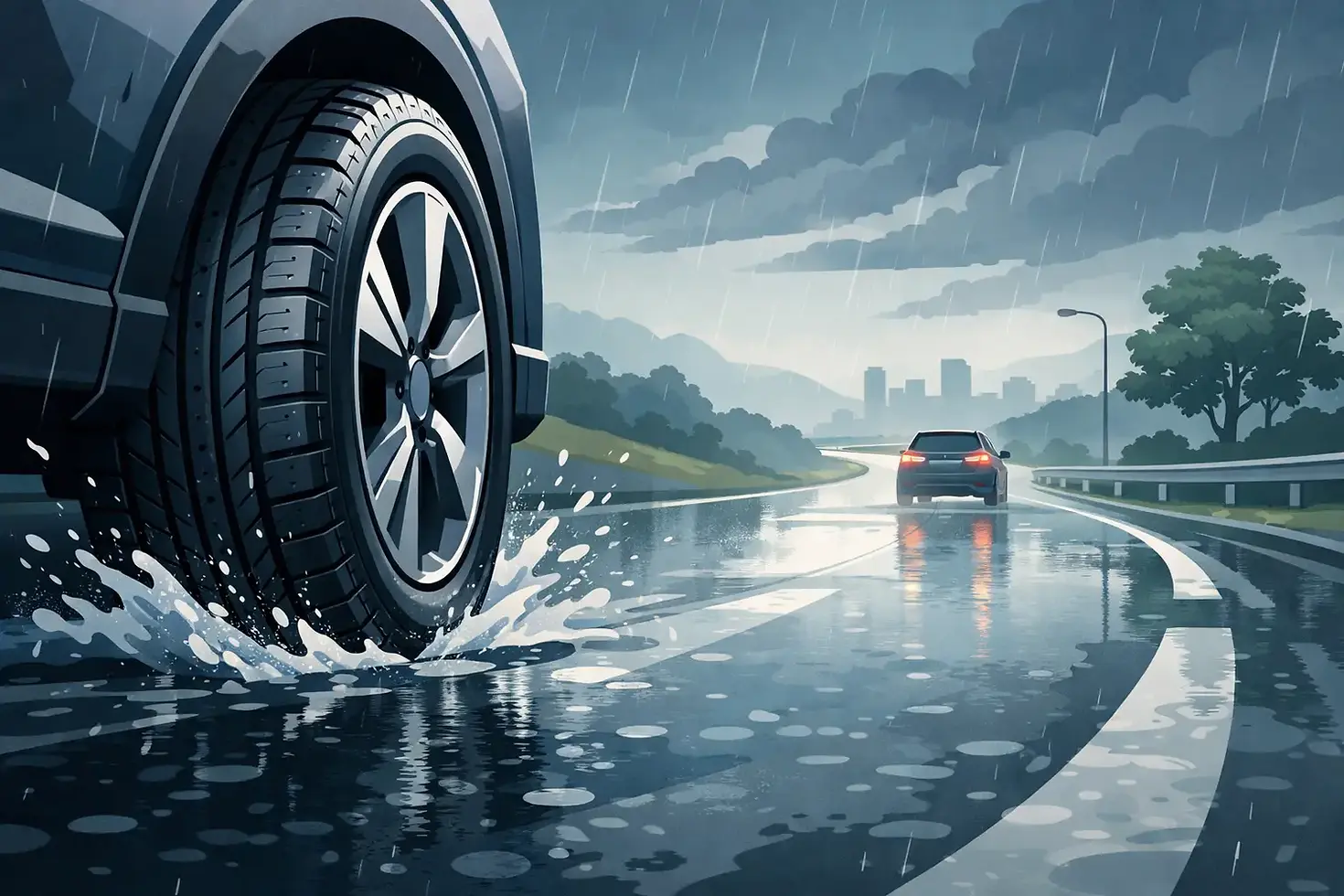
A tire clears water through its grooves. As the wheel rolls forward, channels in the tread move water away from the contact patch - the small area where rubber meets the road. If the tire cannot clear water quickly enough, it can begin to hydroplane. At that point, the vehicle is riding on water instead of gripping the road.
The strongest wet-road tires combine three things: a water-clearing tread pattern, a rubber compound that stays flexible in cooler and wet conditions, and a high wet-grip rating. None works perfectly in isolation. A deep-looking tread with a hard compound may still struggle to stop well in rain, while a premium wet-grip tire cannot perform as intended if it is underinflated or worn near the legal limit.
Tread channels and sipes
Look closely at a quality rain-focused tire and you will usually see wide circumferential grooves running around the tire, along with angled channels that direct water outward. These features improve resistance to hydroplaning, especially on motorways and roads with pooled water.
Sipes are the fine cuts across the tread blocks. They create extra gripping edges that help the tire bite into a damp or greasy surface. They are especially useful on wet city streets, roundabouts, and junctions where oil residue can rise to the surface after rain.
An aggressive tread is not automatically better. Very open patterns can create more road noise and may affect dry-road precision or fuel economy. The right choice depends on how and where the vehicle is used.
Rubber compound and wet braking
Tire compound matters just as much as tread. Modern wet-weather compounds often use silica to improve grip on wet asphalt without making the tire excessively soft. A flexible compound follows the tiny texture of the road surface more effectively, helping braking and cornering in rain.
Wet braking should be a priority for family cars, commuter vehicles, delivery vans, and anyone who covers high mileage. A shorter stopping distance gives a driver more margin when traffic suddenly slows or a pedestrian steps into the road. It is one of the clearest safety benefits you can buy with the right tires.
Wet-grip labels are useful, but not the whole answer
Tire labels can help compare wet braking. In many markets, wet grip is shown on a scale, with the highest-rated options delivering better measured braking performance than lower-rated alternatives under test conditions.
Use that rating as a starting point, not a final decision. It does not fully describe hydroplaning resistance, steering feel, wear rate, winter suitability, or performance when the tire is partly worn. Check the tire’s intended use, load rating, speed rating, and fitment against your vehicle manufacturer’s requirements before buying.
Choose the Right Tire Type for Your Driving
There is no single best tire for every rainy road. A driver making short urban trips has different needs from a tradesperson carrying equipment in a loaded van or a driver regularly traveling at motorway speeds.
All-season tires for mixed conditions
For many drivers, a quality all-season tire is a practical choice. It is designed to handle wet roads across a broad range of temperatures and can offer useful cold-weather performance without the inconvenience of changing tires twice a year.
All-season tires suit vehicles that see regular rain, moderate winter conditions, and everyday mileage. The trade-off is that they may not provide the sharp dry-weather response of a dedicated summer performance tire, or the maximum snow traction of a true winter tire.
Summer tires for warm, wet weather
A good premium summer tire is not only for dry roads. Many are engineered to deliver excellent wet braking and confident handling during warm, rainy conditions. They can be a strong option for drivers who prioritize responsive steering and cover most miles in milder weather.
However, summer compounds become less effective as temperatures fall. If your routes involve frequent cold snaps, frost, or wintry conditions, an all-season option may provide a better safety margin.
Commercial and van tires for load control
Vans need more than car tires with a similar tread pattern. Their tires must support higher loads, cope with repeated curb contact, and remain stable during braking with tools, stock, or deliveries on board.
Choose the correct commercial specification and load index. A cheaper tire that wears quickly or feels unstable when loaded can cost more through downtime, uneven wear, and reduced driver confidence. For fleet operators, consistent tire specification also makes inspections and replacements easier to manage.
Do Not Ignore Tire Size, Load Rating, and Pressure
Even a top wet-weather tire will underperform if it is incorrectly fitted. The tire size must match the approved specification for the vehicle, including width, profile, diameter, load index, and speed rating. Changing to a wider tire without considering the approved fitment can increase the risk of hydroplaning in deep water because more water must be displaced.
Pressure is equally important. Underinflated tires flex excessively, generate heat, and can struggle to maintain their designed contact patch. Overinflation can reduce the tire’s effective contact area and make the ride harsher. Check pressures when tires are cold and set them according to the vehicle placard or handbook, accounting for heavy loads where required.
If a vehicle pulls to one side, vibrates through the steering wheel, or shows uneven tread wear, the issue may be alignment, balancing, suspension wear, or damage rather than the tire model itself. Replacing tires without diagnosing the underlying cause can lead to the same problem returning early.
When Wet-Road Performance Starts to Fade
Tread depth is the obvious factor, but it is not the only one. As a tire wears, its grooves hold less water and hydroplaning resistance falls. A tire may still be legally usable yet no longer give the wet-road confidence it offered when new.
Inspect tires regularly for shallow tread, cracks, bulges, sidewall cuts, embedded objects, and irregular wear. Pay particular attention to the inner shoulder, which is easy to miss without turning the steering wheel or having the vehicle inspected. A slow puncture can also reduce wet handling before the tire looks visibly flat.
For the best results, replace tires in matched pairs on the same axle where possible. On many vehicles, the newer pair is commonly fitted to the rear to improve stability in wet conditions, but manufacturer guidance and the vehicle’s drivetrain should always be considered. An experienced technician can assess the current tread depths and recommend the safest placement.
Wet-Weather Driving Still Matters
The best tires give you more control, not unlimited control. Reduce speed before standing water, increase following distance, and avoid sudden steering, braking, or acceleration inputs. Cruise control is best avoided in heavy rain because immediate speed adjustment may be needed.
If the vehicle begins to hydroplane, ease off the accelerator smoothly, keep the steering wheel steady, and avoid slamming on the brakes. Let the tires regain contact with the road before making major steering corrections. If a tire is damaged, losing pressure, or showing a warning light, pull over safely rather than trying to continue through wet conditions.
A tire inspection is a small job compared with the disruption of a roadside failure. MobileTyreXpert can assess damaged, worn, or punctured tires at your location, fit the correct replacement, and check balancing so the vehicle is ready to return to the road with confidence. Before the next heavy downpour, check your tread and pressures - rain rarely gives drivers extra time to prepare.


Comments