
Tyre Blowout Response When Seconds Matter
A tyre blowout response is not about making a quick turn to the shoulder. It is about keeping the vehicle stable during the first few seconds, when a sudden loss of tire pressure can pull the steering, unsettle the suspension, and make instinctive braking dangerous.
A blowout may sound like a sharp bang, followed by vibration, a heavy pull through the steering wheel, or the feeling that one corner of the vehicle has dropped. The correct response is calm, deliberate, and simple: hold the wheel, ease off the accelerator, let the vehicle slow, and move out of traffic only when you have full control.
Tyre Blowout Response: Keep Control First
The moment a tire fails, keep both hands firmly on the steering wheel and look where you need the vehicle to go. Avoid staring at the damaged tire, other drivers, or the edge of the road. Your hands tend to follow your eyes, so focus well ahead and make only small steering corrections.
Do not stamp on the brake pedal. Hard braking transfers weight forward and can make a front-tire blowout harder to control. It can also destabilize a vehicle that is already pulling to one side. Instead, smoothly release the accelerator and allow engine braking and rolling resistance to reduce your speed.
Keep the vehicle in its normal drive gear while it settles. Selecting neutral too early removes some of the control provided by the drivetrain. Once speed has fallen and the car is tracking straight, use light, progressive braking if needed. If you are on a freeway or fast road, maintain a calm, steady line rather than forcing an immediate move to the shoulder.
When you can safely do so, signal and guide the vehicle toward a safe stopping place. A parking area, lay-by, exit ramp, or quiet side road is preferable to a narrow shoulder. If the shoulder is your only option, pull as far from moving traffic as conditions allow without driving onto unstable ground, soft verges, or a steep edge.
What not to do during a blowout
The most common mistakes happen because drivers try to solve the problem too quickly. Avoid sudden steering, aggressive braking, rapid lane changes, and switching off the engine while moving. Do not try to inspect the tire before the vehicle is fully stopped, secured, and clear of traffic.
Hazard lights are useful once the vehicle is stable and slowing in a predictable path, particularly if traffic behind you needs warning. But steering and speed control come first. If you need both hands on the wheel, keep them there until the vehicle is safely under control.
Once You Have Stopped Safely
Bring the vehicle to a complete stop, select Park or neutral with the parking brake applied, and turn on the hazard lights. If it is dark, raining, or visibility is poor, keep your lights on as well. Take a breath before opening the door or getting out.
Whether you should leave the vehicle depends on the road environment. On a busy high-speed road, remaining seat-belted inside the vehicle may be safer than standing beside traffic, unless the vehicle is in immediate danger or authorities direct you to leave. If you do exit, move well away from traffic and, where available, behind a safety barrier. Never stand between your vehicle and passing vehicles, and do not attempt a roadside tire change in an exposed lane or narrow shoulder.
A quick visual check can tell you whether the tire is visibly shredded, separated from the wheel, cut at the sidewall, or simply flat. However, do not assume the wheel, suspension, brakes, or other tires are unaffected. A tire that failed at speed can damage the rim and wheel arch, while driving even a short distance on a deflated tire can destroy its internal structure.
If you have a spare tire and are in a genuinely safe location, you may be able to fit it. For many drivers, though, waiting for a qualified mobile technician is the safer option. Modern vehicles may have locking wheel nuts, no spare tire, tire-pressure monitoring systems, or wheel specifications that require accurate torque and balancing checks. Commercial vans can add load weight, larger wheel hardware, and schedule pressure to the situation.
Decide Whether the Tire Can Be Repaired
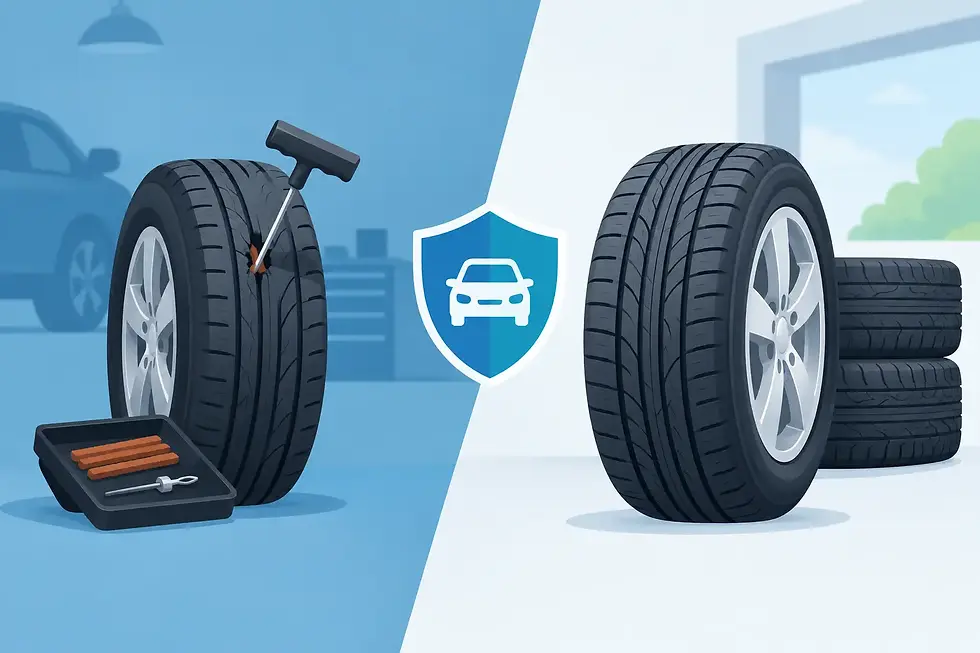
Not every sudden flat is a complete blowout. A puncture in the central tread area may be repairable after a proper internal inspection. A sidewall split, a large cut, a tire that has been driven flat, or a tire with exposed cords generally requires replacement.
The distinction matters. An external plug might appear to hold air, but it does not confirm that the tire’s inner liner and carcass are sound. Fitting a replacement without checking the wheel can create another problem if the rim is bent, cracked, or unable to seal correctly.
A professional roadside assessment should include the tire, valve, wheel, visible suspension components, and remaining tire pressures. The technician should also confirm the replacement tire has the correct size, load rating, speed rating, and specification for the vehicle. On performance vehicles and loaded vans, these details affect handling, braking, and tire life.
After installation, the wheel nuts need to be tightened to the manufacturer’s specified torque, not simply tightened as far as possible. Tire pressures should be set accurately, and the tire-pressure monitoring system may need to be checked or reset. If the failed tire caused vibration before or after the incident, ask whether wheel balancing or a closer alignment inspection is needed.
When to Call for Emergency Tire Support
Call for assistance immediately if the tire has disintegrated, the wheel is damaged, you are on a live traffic route, you have no usable spare, or you are responsible for a loaded commercial vehicle. It is also sensible to call when you are unsure whether the tire is safe to repair. Saving a short wait is not worth a second roadside failure.
When requesting help, provide your exact location, vehicle make and model, tire size if known, and a clear description of the damage. Mention whether you are in a safe parking area, on a shoulder, at home, or at a work site. For fleet vehicles, share the axle position, load condition, and any access restrictions so the technician can arrive with suitable equipment and the right replacement options.
MobileTyreXpert can assess the damage at your location, fit a suitable replacement, carry out the necessary safety checks, and help reduce the downtime that follows a roadside tire failure. For drivers and fleet operators, on-site support avoids the added risk of driving on a compromised tire to a garage.
Prevent the Next Blowout
Blowouts are not always preventable. Road debris, impact damage, and sudden defects can occur without warning. But many failures are preceded by underinflation, overloading, aging rubber, sidewall damage, or a slow puncture that was ignored.
Check tire pressures when the tires are cold, including the spare where fitted. Use the pressure specified for your vehicle and load, rather than the maximum pressure printed on the tire sidewall. Inspect the tread and sidewalls regularly for nails, cuts, bulges, cracking, and uneven wear. A bulge is especially urgent because it can indicate broken internal cords.
For vans and commercial vehicles, build tire checks into the daily walk-around. Extra payload and high mileage amplify the effects of incorrect pressure and worn tread. If a vehicle repeatedly loses pressure or pulls to one side, arrange an inspection before it becomes an emergency callout.
A blowout is alarming, but it does not have to become a collision or a long day stranded at the roadside. Stay steady, slow down gradually, choose safety over speed, and let a proper inspection determine the next move.


Comments